Blog / Guide
How to prepare a CEO to speak on camera
A practical guide to preparing a CEO before filming on camera: the pre-shoot call, posture, language and the common mistakes that ruin a take.
There is a conversation I have on almost every corporate shoot. The CEO walks into the room, looks at the camera and says: "Let me know when you start rolling, I get nervous in front of a camera." This is someone who has presented quarterly results to a hundred people for twenty years without flinching. And they get nervous in front of a 50mm lens.
It isn't a weakness. It's a preparation problem. The CEO doesn't know exactly what happens once recording starts, what they will be asked or how long it will take. And when someone doesn't know what to expect, the body goes on alert. My job, before I turn the camera on, is to remove that uncertainty.
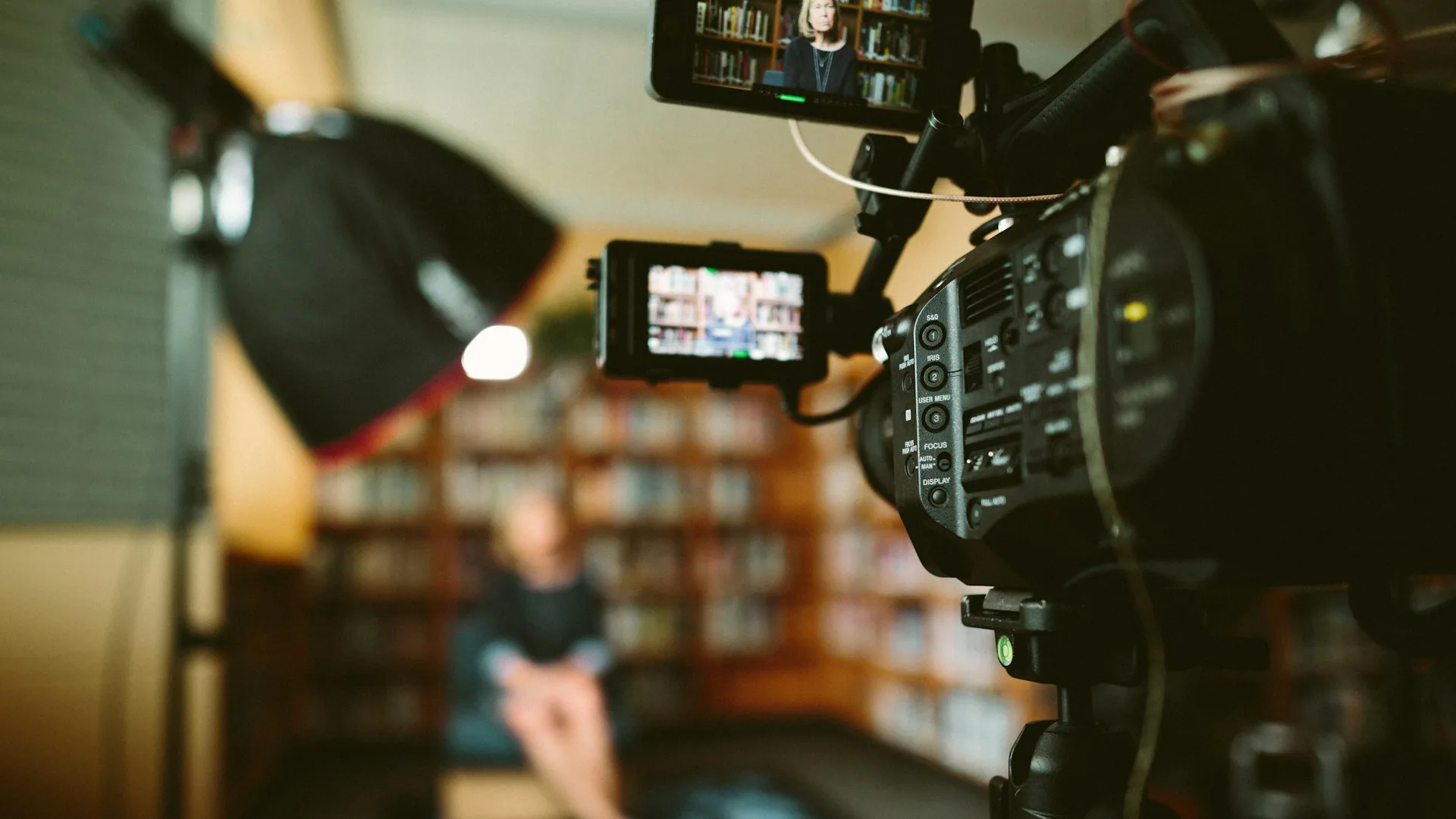
Why the camera is more intimidating than public speaking
Speaking to an audience gives you feedback. You see faces, you can adjust your pace and you can tell whether people are following. The camera gives you nothing. It stares back and doesn't react. For someone who hasn't filmed much, that lack of feedback is disorienting.
The other factor is permanence. A presentation gets forgotten. A video stays. That adds pressure. The CEO feels that every sentence will live forever, so they chase perfection in real time, and that blocks natural speech.
That's why preparation isn't only technical. It's also psychological: they should arrive on set knowing that mistakes are normal, that there's room for retakes and that the result will be good.
How I prepare a CEO before filming
The pre-shoot call
Before the shoot, I have a 20-minute call with the CEO or their assistant. Not to rehearse a script, but to go over the format: how many questions there are, what kind of answers we're after, whether they'll read from a teleprompter or speak off the cuff, and how much time we have on set. I also tell them what they don't need to worry about: slips in pronunciation get cut, long pauses get edited out, and if a take goes wrong there's time to do it again.
Posture and positioning before we start
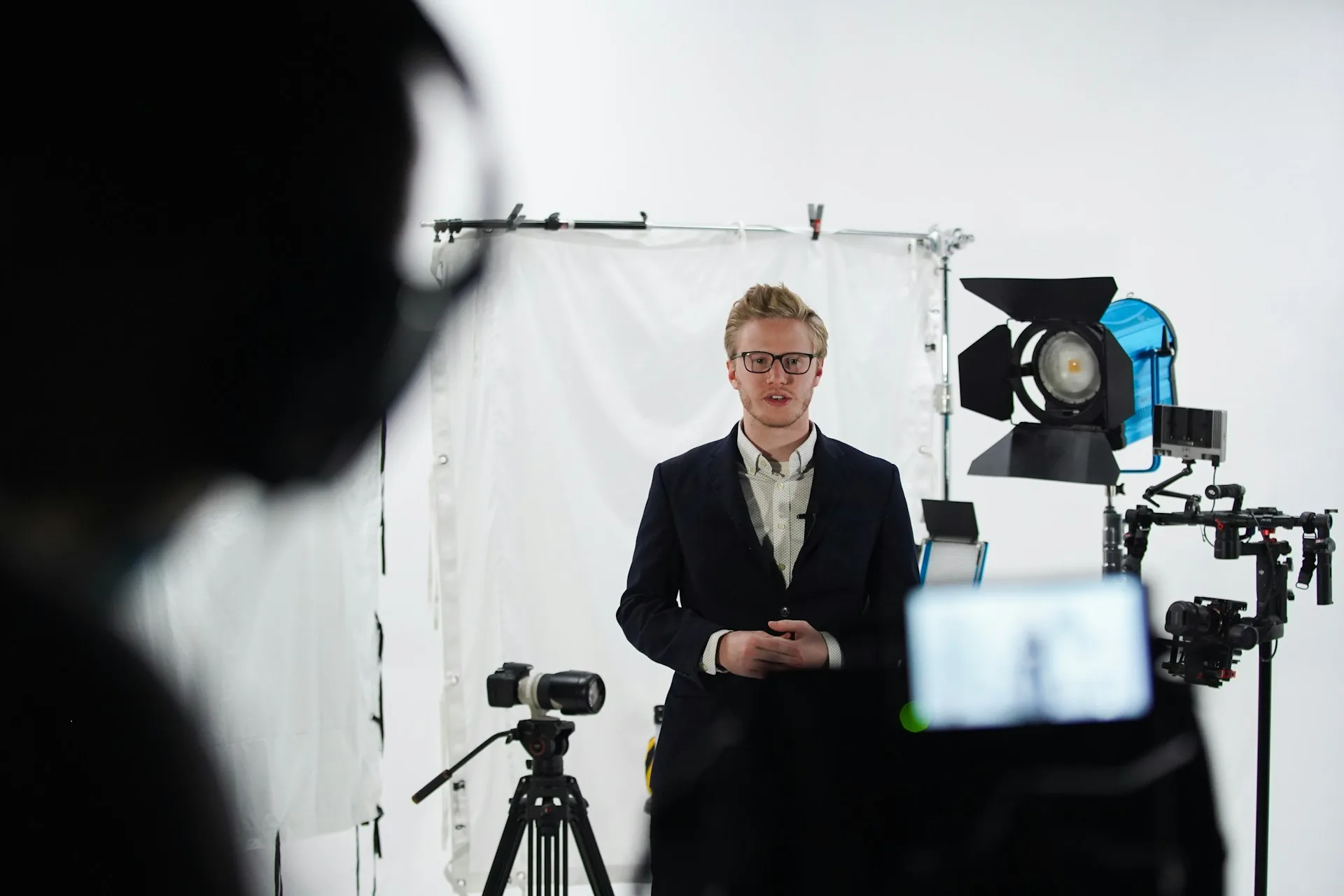
When I get to the set, I spend 5 to 10 minutes positioning the CEO before rolling. I ask them to sit exactly the way they normally sit, not to adopt a "correct" posture that will feel uncomfortable after three minutes. We adjust the chair so there's no tension in the shoulders. I tell them where to look: if there's an interviewer, they look at the interviewer, not the camera. If they're speaking straight to camera, I give them a reference point at the right height so they don't lift their gaze.
Language during the shoot
Before the first question, I do a warm-up take. I ask them to say out loud their name, their title and what they did before they got that job. It isn't recorded for the final video. It lets the voice settle, gets the body used to speaking towards the camera, and shows them the world doesn't end if they make a mistake. After that, the first real question always comes out better.
Mistakes that ruin the take
- Sending them the full script the night before so they can memorize it. If they memorize it, it sounds memorized.
- Not telling them how much time is available. Uncertainty about the length adds unnecessary pressure.
- Going straight into the first question without a warm-up take.
- Asking them to "just be natural". It's the most useless direction you can give in front of a camera.
- Scheduling the shoot after a four-hour block of meetings. Mental fatigue shows on camera.
- Using a background the CEO feels uncomfortable with or that doesn't represent the company well.
Frequently asked questions
How much time does a CEO need to prepare before filming?
A 20-minute call beforehand and the questions sent 24 hours in advance are usually enough. There's no need to memorize anything. They just read the questions so the topics don't catch them off guard.
Teleprompter or unscripted answers for a CEO?
It depends on the person. Those with a lot of public speaking experience usually do better answering a short question without reading. Those who don't film often appreciate the teleprompter, as long as the text is written in their own words and not in marketing jargon.
What if the CEO can't get through a section without mistakes?
I tell them it's fine and we keep filming in chunks. A 2-minute answer can be recorded in four 30-second takes and cut together afterwards without anyone noticing. It's more editing work, but the result is just as good.
Does a CEO need makeup for a video shoot?
A little powder or a light foundation helps reduce shine under the lights. It isn't mandatory, but if the CEO is going to spend 30 minutes under direct lighting, they'll be glad of it. I carry mattifying powder in my kit for those cases.
If you have a project that includes interviews with executives and want to talk through the format before stepping on set, you can get in touch through the contact page.