Blog / Guide
Corporate video for the real estate sector: how I approach it
How I approach corporate video for property developers and real estate agencies in Madrid: what to film at each construction stage, which shots actually sell and which interior mistakes I avoid.
A poorly planned real estate video shows square meters. A well-planned one shows what it's like to live there. That difference is what decides whether someone keeps watching to the end or closes it after five seconds.
I've spent several years filming for property developers and real estate agencies in Madrid, covering new homes as well as offices and retail spaces. The challenge is always the same: turning an empty or half-built space into somewhere someone can picture themselves living.
What it is and why it matters
A corporate video for the real estate sector serves different goals depending on who commissions it: a developer wants to sell off-plan or completed homes, an agency wants to position itself as the go-to name in an area, and a company with offices or warehouses wants to show its facilities to clients or investors. What they have in common is that the video has to partly replace the physical viewing.
It matters because in this sector the buying decision is slow and expensive, and the first filter almost always happens on a screen. If the video doesn't show how the morning light comes in or how close the metro is, that lead is lost before they book a viewing.
It also matters because it competes directly with 3D renders. A render sells a promise; real video, once construction is well under way, sells certainty. And that certainty is what books viewings.
How to do it well
I film in stages, not just at the end
For new-build homes, I plan short shoots at different points in construction: structure, facade and model-unit handover. It isn't just social media content during the build; it's proof the project is genuinely progressing, something a buyer who has already paid a deposit values a lot.
I prioritize natural light and real spaces over empty shots
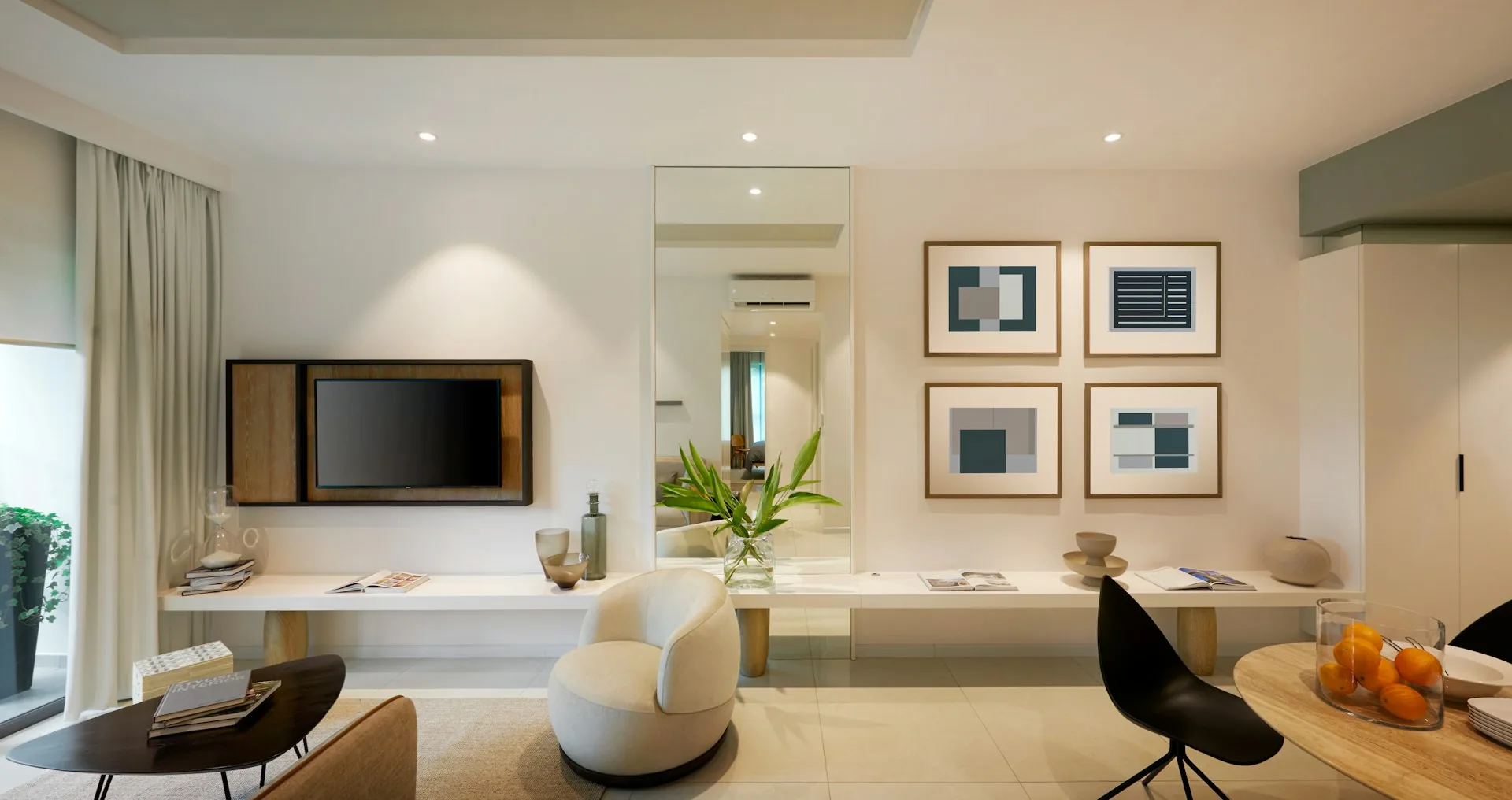
I always film with natural light as the star, at the time of day when it best enters each room. And I avoid static shots of empty rooms with no sense of scale: I add a reference piece of furniture, a person walking down the hallway, something that gives the real size of the space. Without it, any living room looks smaller than it is.
The surroundings matter as much as the home
Part of the shoot always happens outside: the neighborhood, access to the metro or the highway, the park next door, the communal areas if the development has them. That's what really decides many purchases, and it's exactly what a render never shows naturally.

Common mistakes
- Relying only on 3D renders when construction is far enough along to film for real.
- Filming interiors without controlled natural light, leaving spaces looking cold and artificial.
- Not showing the surroundings (neighborhood, transport links, communal areas), which is often what decides the purchase.
- Using one generic video for every development instead of tailoring it to each one's target buyer.
- Forgetting current drone regulations when planning an aerial shot of the development.
- Delivering only a long horizontal cut, with no vertical edits designed for Instagram or property portals.
Frequently asked questions
How much does a corporate video for a real estate development cost?
For a development with a model unit and a drone shot of the building, the usual range is €1,500 to €3,500, depending on the number of rooms and whether several deliverables are needed (horizontal for the website and verticals for social media).
Is it better to film the property furnished or empty?
Furnished, whenever possible. An empty apartment loses scale and warmth on camera. If there's no real furniture, I use at least a few reference pieces (a table, a chair) so the viewer understands the real size of each room.
How long is a good real estate video?
Between 60 and 90 seconds for the main cut of a home or retail space. For a whole development with several unit types, I prefer a slightly longer video (2 to 3 minutes) plus short cuts for each unit type for social media.
Do you need a drone for this type of video?
Not always, but it really helps place the development in its surroundings: proximity to roads, green spaces, other buildings. If location is the main selling point, I do recommend it. If the selling point is the interior, it isn't essential.
If you're launching a development or want to show your offices to clients and investors, tell me about the project and the stage it's at via /en/contacto.