Blog / Guide
Corporate video for the education sector: how I approach it
How I approach corporate video for schools, academies and universities in Madrid: image permissions for minors, real energy and what builds trust with families.
In education, video doesn't sell an enrollment, it sells a decision about the future. A family choosing a school for their child, or a student choosing a university, doesn't just compare curricula: they compare the environment that person will live in for years. If the video doesn't convey that, it's just another institutional brochure.
I've filmed at schools, academies and university faculties in Madrid, and the challenge is always the same: showing the real energy of the classrooms without falling into a stiff corporate video, and handling minors' image rights with the care the law and common sense demand.
What it is and why it matters
A corporate video for the education sector serves different goals depending on who commissions it: a school wants to show its facilities and teaching approach at an open house, an academy wants to show its students' real results, and a university wants to strengthen its brand against other faculties with similar offerings. What they have in common is that the video partly replaces the in-person visit many families never get around to making.
It matters because choosing a school is a high-stakes decision, both financially and emotionally. Nobody enrolls their child, or themselves in a degree, based only on a curriculum PDF. You need to feel the atmosphere: how students move through the hallways, how a teacher talks about their subject, what the place looks like on a normal school day.
It also matters because the rules protecting minors' image rights are stricter here than in almost any other sector. A well-intentioned video can become a serious problem if an identifiable student appears without signed authorization from their family.
How to do it well
Consent for minors is arranged with the school, not on shoot day
Before filming, I ask the school to identify which students have image authorization signed by their families, something many schools already collect at the start of the year. If that hasn't been arranged in advance, I prioritize wide shots where no face is clearly identifiable, or I film only with adult students and teaching staff.
Real energy is worth more than an empty classroom
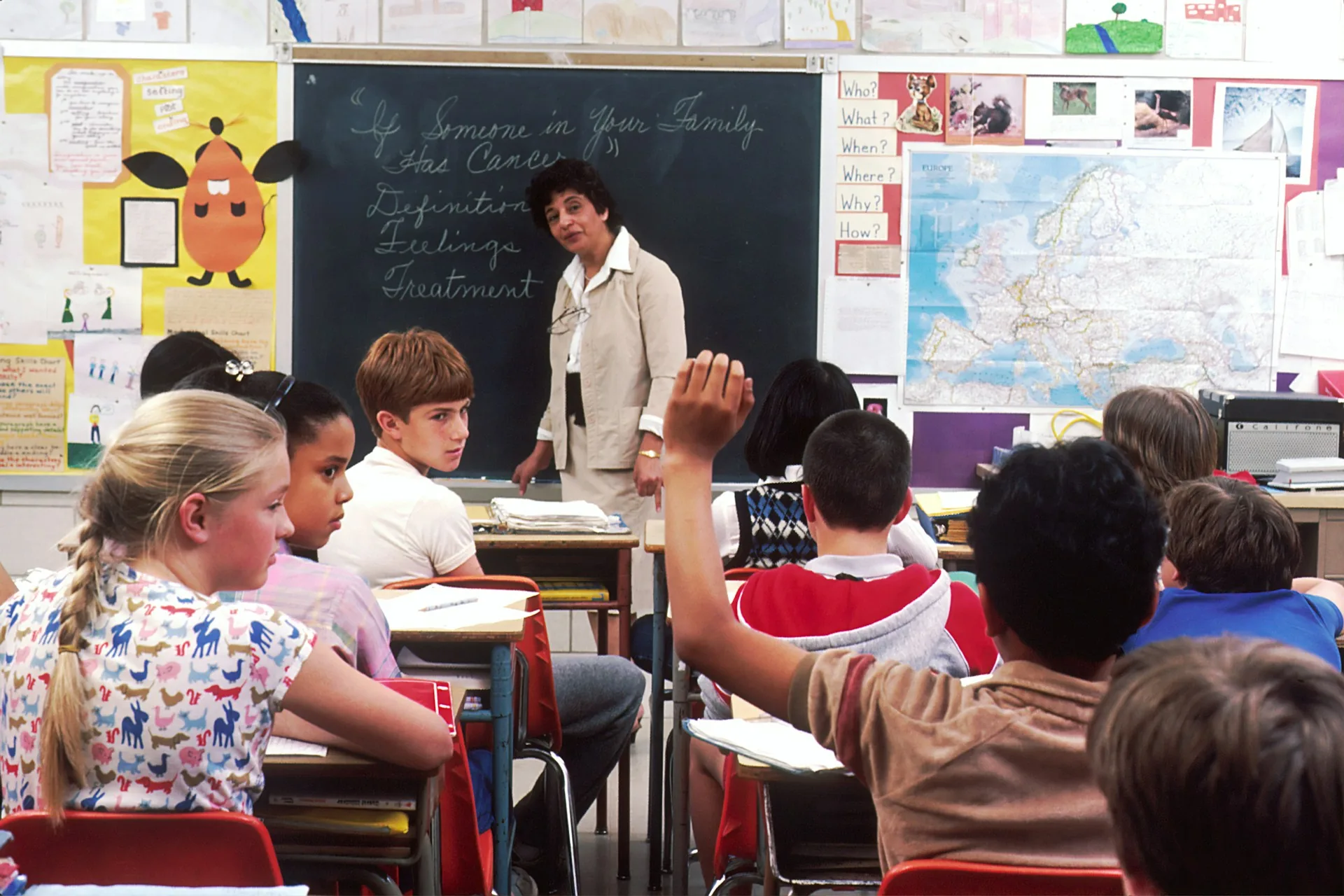
A shot of empty desks in midday light conveys nothing. I prefer to film a class in progress, a lab in use, recess, a hallway between lessons. You lose some control over composition, but you gain what really convinces a family: seeing that the school has a life of its own.
Teachers and students speak in their own words
When I film a teacher or a former student talking about their experience, I avoid memorized scripts: it's obvious right away and undermines credibility. I prefer open questions, with a teleprompter only as support for key ideas, and I let the person speak in their own words. The result sounds like a real testimonial, not a school ad.
Common mistakes
- Filming identifiable minors without image authorization signed by their families.
- Showing only the building and empty classrooms, without the real atmosphere of students and teachers.
- Word-for-word recited scripts that sound like an corporate ad, not a testimonial.
- Not coordinating the shoot with school management, interrupting lessons or exams.
- Using music and editing pace designed for a different audience that doesn't connect with families or young people.
- Not including concrete results (career outcomes, former student testimonials), which is what really builds trust.
Frequently asked questions
How much does a corporate video for a school or university cost?
For a school with facilities and two or three testimonials from teachers or students, the usual range is €1,200 to €3,000, depending on the final length and whether additional pieces for social media are needed.
Is parental consent mandatory to film students?
Yes, whenever the minor is identifiable in the video. Many schools already collect this authorization at the start of the year, but it's worth confirming it specifically for audiovisual use before filming.
How long is a good corporate video for a school?
Between 90 and 150 seconds for the main video presenting the school. For open houses or social media, I prefer shorter pieces of 30 to 45 seconds focused on a single message.
Can you film without interrupting lessons?
Yes, by scheduling the shoot between lessons, during breaks or in specific time slots agreed with management. I always avoid walking into a classroom in the middle of an explanation or an exam.
If you run a school, academy or faculty and want a video that conveys your school's real atmosphere while protecting your students' image rights, tell me about your project via /en/contacto.