Blog / Guide
Corporate video for the food and agriculture sector: what makes it work
How I approach a corporate video inside a food processing plant: hygiene regulations, filming without stopping the production line and how to tell the story of the process without falling into a generic corporate video.
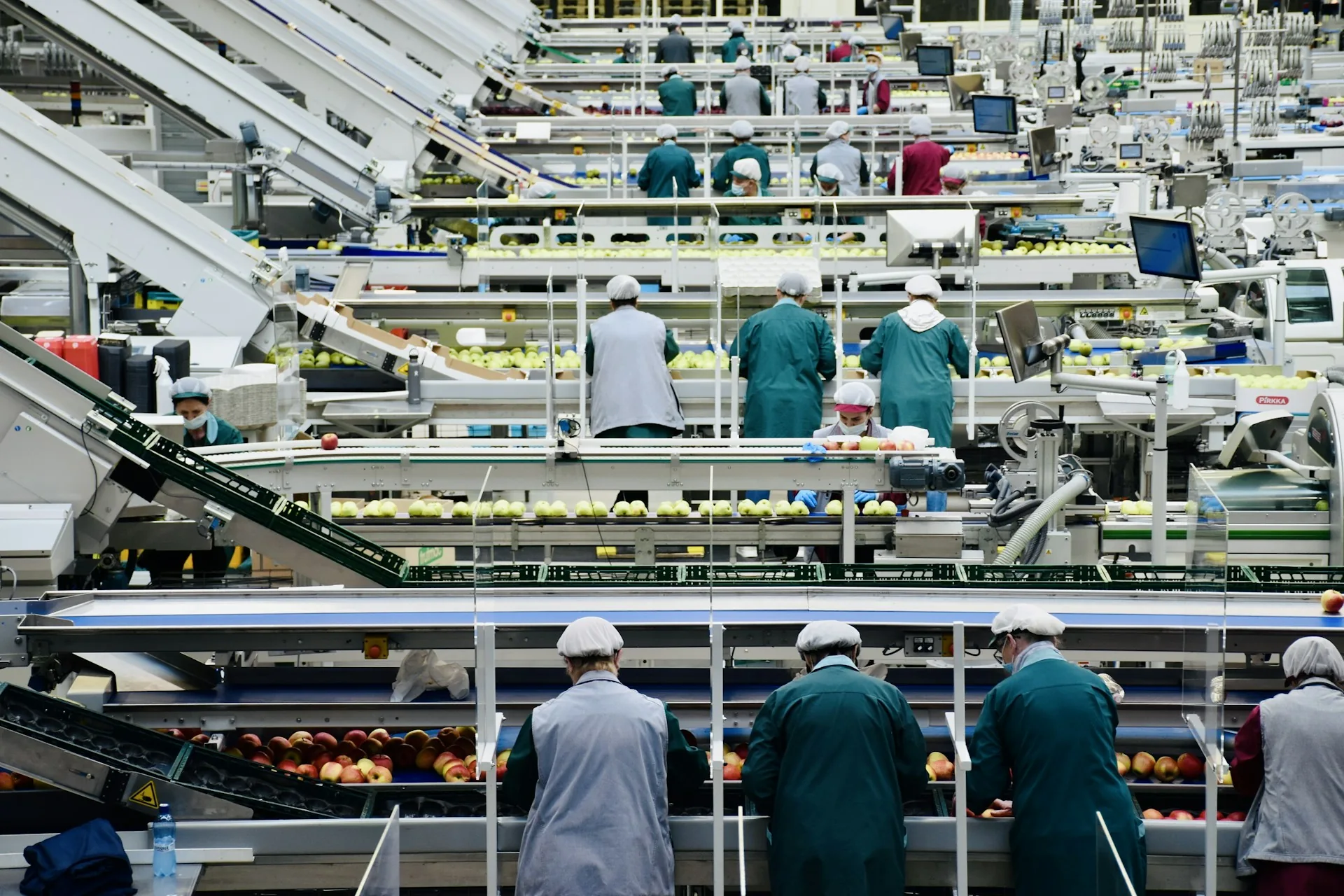
Filming in a food processing plant is nothing like filming in an office. There's a production line that doesn't stop because a camera is in front of it, hygiene protocols that have to be followed from minute one, and machinery that sets its own working pace.
I've filmed at canneries, packing plants and fresh produce facilities. Each plant has its own specific rules, but the pattern repeats: it takes more planning than an office shoot, and the best results come when I let the process speak for itself, without forcing anything in front of the camera.
What it is and why it matters
A corporate video for a food and agriculture company usually covers two needs at once: showing the production process transparently and building trust with distributors, B2B clients or end consumers. It isn't product advertising in the classic sense; it's showing how the work is done so that viewers trust what they buy.
It matters because in this sector trust is built on concrete details: quality control, traceability, plant conditions. A well-planned video turns those processes, which are normally invisible to the customer, into something that can be seen and verified.
There's also a layer other sectors don't have: health and food safety regulations. You can't walk into a production area with just any equipment or clothing, and that shapes what can be filmed and how, not just the video's messaging.
How to do it well
Hygiene rules and plant access
Before setting foot in the plant, I ask about the exact hygiene protocol: coat, hairnet, specific footwear, sometimes gloves. The camera equipment also has to pass that check, and some areas simply don't allow cameras under the regulations. I confirm this with the quality manager before locking in a shoot date, not on the day itself.
Filming without stopping the production line
The line doesn't stop for the shoot unless an exception is agreed in advance. I work around the real production pace: wide shots while the line keeps running, and the odd close-up during natural pauses in the process. This means arriving with the shot list locked, because there's no room to improvise on the fly without interrupting the operators.
Showing the process without falling into a generic corporate video
The most common mistake is filming machinery and conveyor belts with no narrative thread, which gives you a video that could be from any factory. I prefer to follow the product: where the raw material comes from, what checks it goes through, how it reaches final packaging. That structure, simple as it is, turns technical shots into a story that's easy to follow.
Common mistakes
- Not confirming the hygiene and access protocol with the quality team before shoot day.
- Filming machinery without any narrative thread linking the shots to the final product.
- Asking to stop the production line without having agreed it in advance, which creates friction with the plant.
- Not planning a traceability or quality control shot, which is usually what builds the most trust when watching the video.
- Filming with equipment or clothing unsuitable for a production area, which can halt the shoot on the spot.
- Dragging the video out by showing the whole process at the same pace, without giving more weight to the steps that build the most trust.
Frequently asked questions
Can you film inside a food production area?
It depends on the plant and the specific area. Some require a coat, hairnet and specific footwear for the camera crew; others don't allow filming under the regulations. It's always confirmed with the quality manager before the shoot date.
Does the production line have to stop for filming?
No, except for a specific shot agreed in advance. The norm is to film around the line's real pace, using natural pauses in the process for close-ups.
How long is this type of corporate video?
Two to three minutes is usually enough to show the whole process without losing the viewer's attention. Longer pieces work better as internal technical material than as a client-facing corporate video.
What should be shown to build the most trust?
The quality control and traceability steps, even if they seem less eye-catching than the machinery. That's what most helps a distributor or B2B client trust the process.
If you run a food and agriculture company in Madrid and want a video that shows your production process with a clear point of view, get in touch via /en/contacto and we'll plan it around your plant's regulations.