Blog / Guide
Location sound for corporate interviews: the bare minimum you need
Three audio essentials for recording corporate interviews with clean sound: a lavalier mic, a backup recorder and real-time monitoring.
Audio decides more than you'd think. You can have a perfect image, well exposed, with great color, and ruin the entire video with bad sound. In corporate interviews this is especially obvious because the viewer is listening to someone speak for two or three minutes. If that audio fails, the message doesn't land.
You don't need to build a recording studio. There are three basic elements that completely change the result. I use them in almost every interview I film.
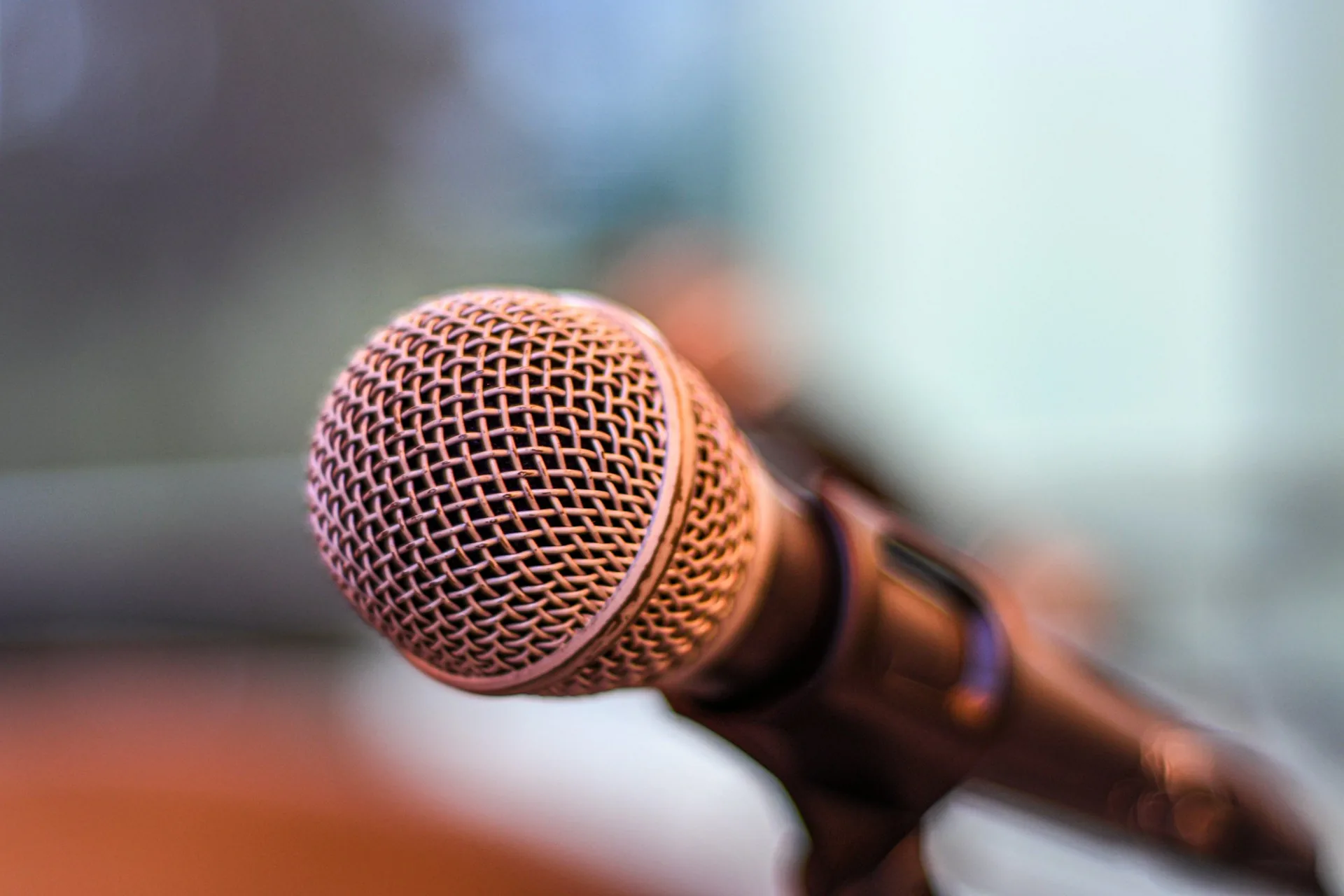
Why audio ruins more videos than picture does
On-camera microphones pick up everything: the air conditioning, street traffic, footsteps in the corridor, the hum of a computer. When there's a constant background noise, the brain notices it even if the viewer doesn't consciously identify it. The result is a sense of low quality that affects how they perceive the message, the company and the interviewee.
The added problem with filming in offices is that they're full of reflective surfaces: flat walls, glass, wooden floors. Sound bounces around and creates reverb that makes the voice sound distant or boxy. A lavalier mic positioned 15-20 cm from the interviewee's mouth captures the voice before that reverb gets mixed in. The difference is huge.
The three essentials for clean sound
Lavalier microphone
This is the most critical element. A wireless lav such as the Rode Wireless GO II or the DJI Mic Mini puts the microphone close to the sound source and eliminates practically all ambient noise problems. The receiver plugs straight into the camera or recorder. Outdoors I add a deadcat to cut out wind. The quality of these systems has improved enormously in recent years; there's no longer any excuse for recording with the on-camera mic.
Portable recorder
In case the wireless system fails, or when I want a safety track, I also record with a Zoom H1n or a Tascam DR-05X connected directly to the lav. It costs less than 80 euros, fits in a pocket and acts as a backup. I put the recorder in the interviewee's pocket or on their belt and sync the audio in the edit. DaVinci Resolve has an automatic waveform sync feature that does it in seconds. If the wireless system has any issue at all, I have the full take on the recorder.
Headphone monitoring
You can't fix in post-production what you don't know is wrong during the shoot. With headphones monitoring the audio in real time, you catch any problem before it's too late: a crackle in the cable, a gust from the air conditioning, clipping from the gain. You don't need studio headphones; in-ears with good passive isolation are enough. Check the levels on the recorder or camera before starting each take.
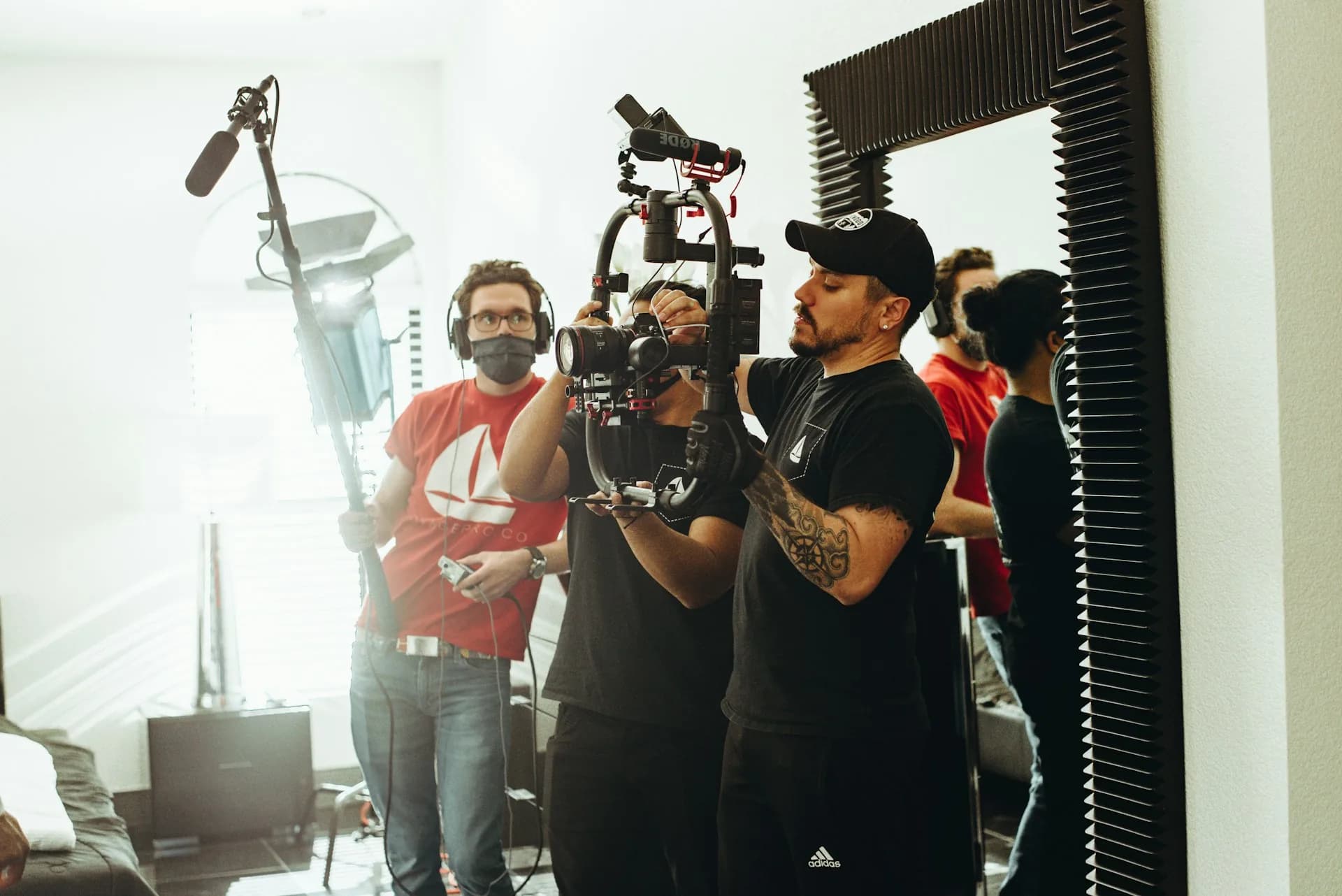
Mistakes you should avoid
- Placing the lav too low: the further it is from the mouth, the more ambience it picks up. Clip it on the top shirt button or the lapel, not the belt.
- Skipping the deadcat outdoors: even without strong wind, any air movement creates noise that can't be removed in post-production.
- Trusting the camera's auto gain: automatic gain control boosts the volume in the pauses and picks up all the background noise. Always set it to manual.
- Recording without a safety track: if your only microphone fails during the interview, you lose the take. A portable recorder as backup prevents irreparable situations.
- Not doing a sound check before you start: 30 seconds of testing with headphones saves you from discovering the problem when you review the footage on your computer.
Frequently asked questions
Is a wired or wireless lavalier better?
For indoor interviews where the interviewee doesn't move, a wired lav works well and eliminates the risk of interference. Outdoors or in spaces with a lot of movement, wireless gives you more freedom and reduces the risk of the cable getting yanked. I almost always use wireless because it makes the shoot more comfortable for the interviewee and gives me more flexibility to adjust the framing.
What if I'm recording in a room with a lot of echo?
Echo can't be completely removed in post-production. The solution is to capture as little of it as possible: move the mic closer to the interviewee's mouth, add fabrics or soft furnishings to the room if possible (curtains, rugs), and choose a smaller room over a large empty one. Sometimes switching rooms is the quickest fix.
Do I need different microphones for outdoors?
The same lav works indoors and outdoors. The difference is in the accessories: a deadcat is a must outdoors and, if the interview is somewhere with a lot of ambient noise, consider recording at a different time or place. Shotgun mics like the Rode NTG4 are a good alternative outdoors when you can't use a lav, but they require a boom operator or a solid on-camera mount.
How much should a minimum audio kit cost?
With around 300-400 euros you can put together a complete system: a wireless lav like the DJI Mic Mini (200-250 €), a backup recorder like the Zoom H1n (75 €) and in-ear headphones with good isolation (40-60 €). You don't need anything more to produce corporate interviews with professional audio.
Audio doesn't have to be complicated. With these three elements I cover 90% of the corporate interviews I film. If you're planning a production and want to talk about the kit that makes sense for your project, you can get in touch through the contact page.