Blog / Guide
Corporate video director in Madrid: what they do and how to choose one
What a corporate video director in Madrid does, how they differ from a production company and how to choose the right professional for your project.
When a company looks for someone to shoot its corporate video, the search usually runs through two or three job titles: filmmaker, videographer, director. The difference isn't just in the name.
A corporate video director in Madrid is the professional who takes full creative and technical charge of a video project: from the concept to the final file. I work alone or with a small crew depending on what the project calls for.
What a corporate video director does
The work doesn't start on shoot day. Before the camera is switched on, I've already spent days working on the concept, the shooting script, the shots I need and the on-set logistics.
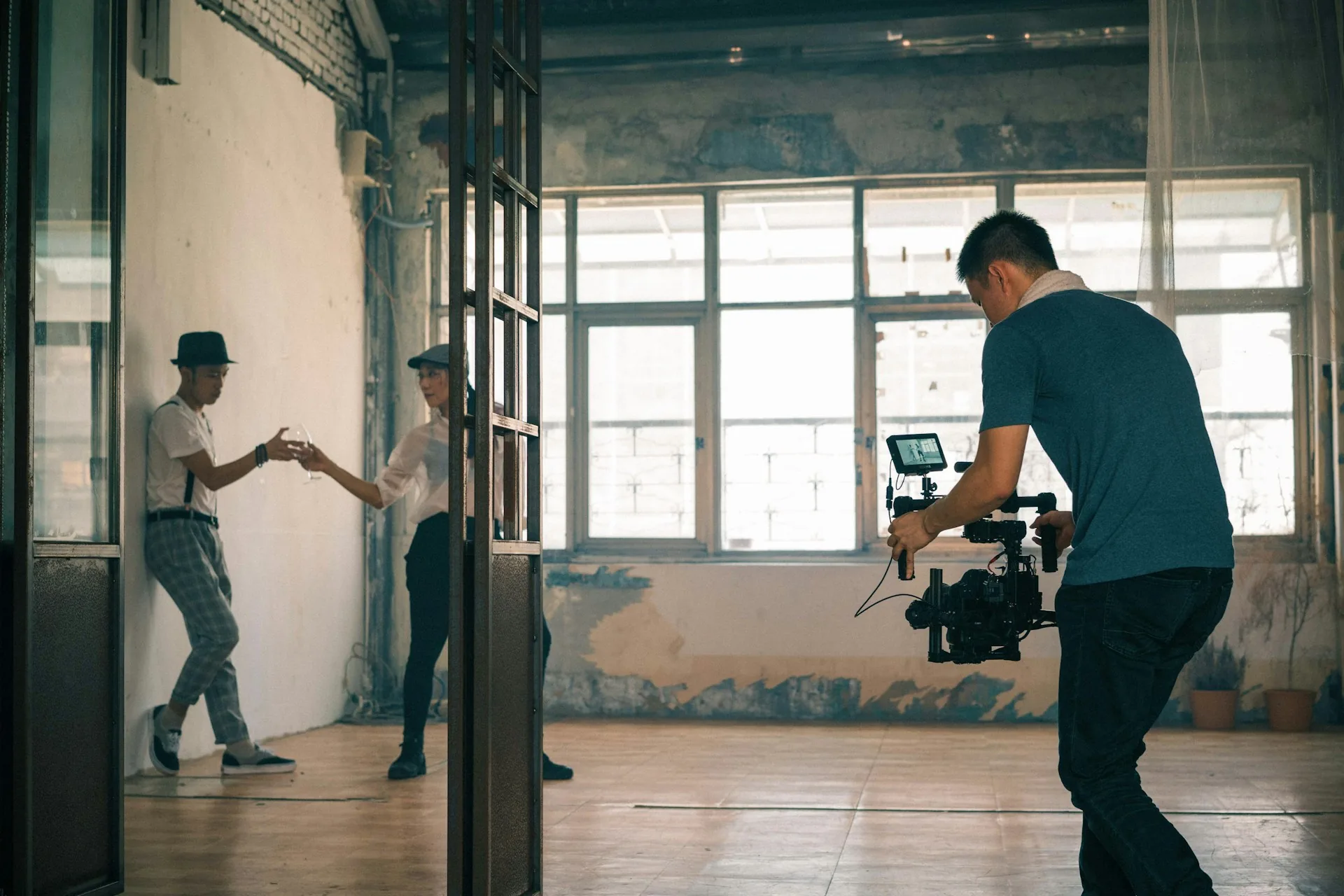
On set, I direct. I decide on framing, lighting, the pace of the interviews and which B-roll shots are worth capturing. If there are people speaking to camera (a CEO, an executive, a speaker), I also take care of preparing them. Helping them loosen up, speak naturally and not look like they're reading, even when they are.
After the shoot comes the edit. Color, audio, subtitles, music. The video you see at the end is the sum of hundreds of decisions made across the three stages: pre-production, production and post-production.
How it works in practice
Pre-production: the stage that shapes the result most
Before the shoot we hold a briefing meeting. I want to understand what the video's objective is, who it's for, which channels it will be published on and what the brand's tone is. With that information I prepare the shooting script or shot plan. I never turn up to film without knowing which shots I need and in what order I'm going to get them.
Production: camera direction and on-set coordination
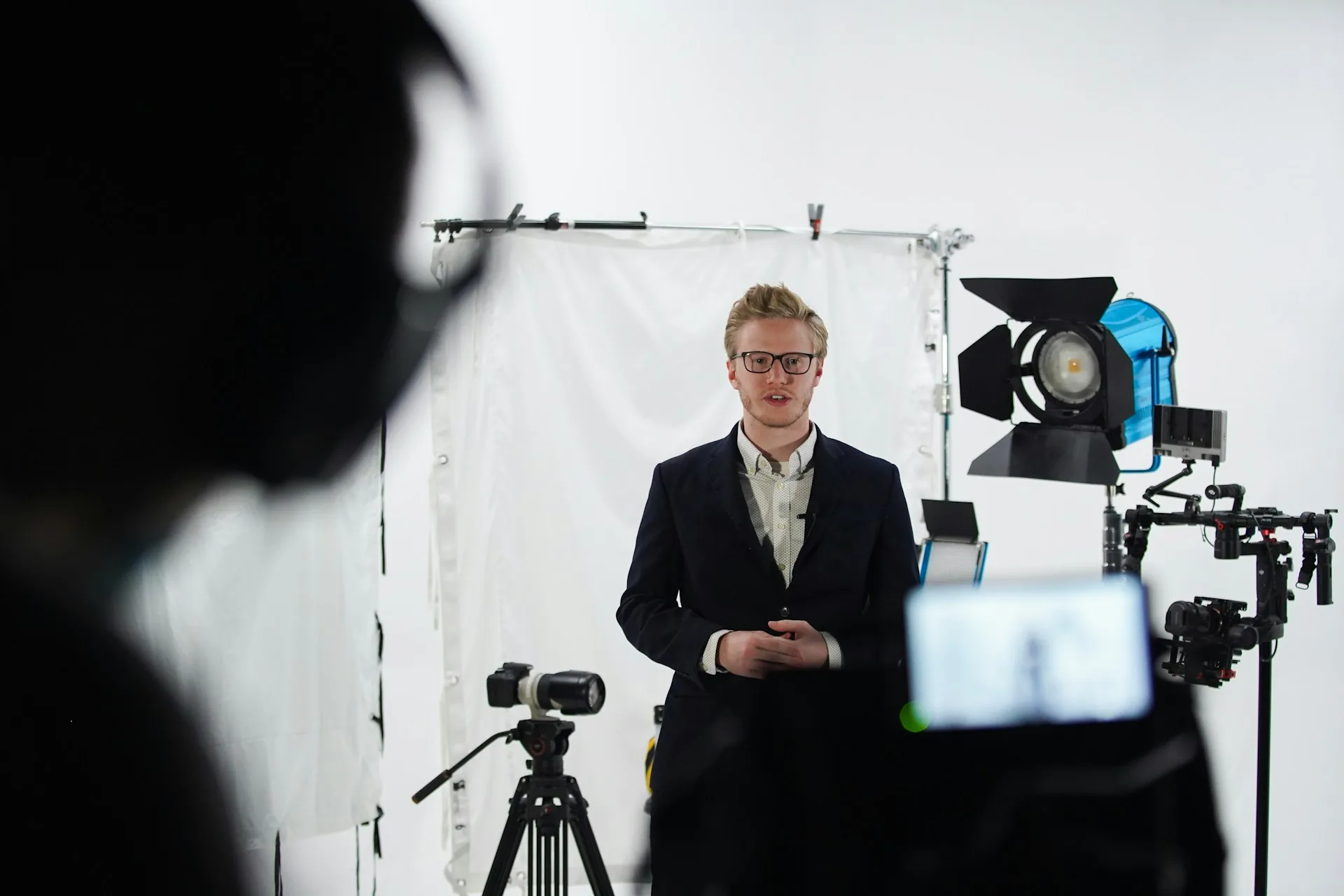
I work with a Sony A7 IV camera, portable LED lights and a wireless lavalier mic. The kit fits in two cases, so setting up in your office or meeting room takes 20-30 minutes with no need for extra technicians. If the project is bigger (a corporate event, a campaign with several on-screen people), we scale up the crew to match what the script requires.
Post-production: from raw files to the final video
I edit in DaVinci Resolve. The usual workflow is: a first structural cut, client review via a link where they can leave comments, adjustments, color grading, audio mix and delivery in whatever formats you need. Two rounds of revisions are included in all my projects. Structural changes that mean re-editing from scratch are quoted as a separate line item.
How they differ from a production company
- A production company has its own staff (director, director of photography, executive producer) and overheads that are passed on to its minimum budget.
- An independent director takes on all those roles or subcontracts only what the project needs. The entry cost is lower and communication is more direct.
- For mid-sized projects (executive interviews, brand films, event coverage or monthly content series), a freelance director is usually more agile and more affordable.
- For campaigns with actors, elaborate set design, complex locations or more than 3-4 shoot days, a production company with a larger structure may be the better fit.
- The choice depends on the project's scope, not on any hierarchy of quality.
Frequently asked questions
How long does a corporate video director take to deliver a project?
It depends on the type of project. A corporate interview shot in half a day can be delivered in 5-7 working days. A brand film with one shoot day is usually ready in 10-15 days. For larger projects or ones with several revision rounds, allow 3-4 weeks from the shoot.
Is a director the same as a videographer?
In practice the terms are used interchangeably. The most common distinction is that 'videographer' is associated with coverage or social content projects, while 'director' implies more artistic direction and responsibility for the project as a whole. There's no fixed rule.
Do I need to hire anyone else besides the director?
For most mid-sized corporate projects, no. The director covers camera, basic lighting and direction. If the project needs a second camera operator, a make-up artist or a sound recordist on set, they're brought in only if the script justifies it.
Can a director film at my premises without special permits?
If the shoot is in your own space (office, showroom, factory, meeting room), you don't need any additional permits. If it's in a public space or at third-party locations, the relevant permits have to be arranged. In Madrid this usually takes between 3 and 10 days depending on the location.
If you have a project in mind (an executive interview, a video for your website, event coverage or a monthly content series), tell me about it through the contact page. I'll give you an estimate within 24 hours.