Blog / Guide
Corporate video pre-production: what to do before the shoot
Pre-production decides whether the shoot flows or turns into expensive improvisation. Script, locations, shooting schedule and logistics: this is what I prepare before switching on the camera.
Before shoot day arrives, there's a phase of work that determines whether everything will flow or turn into expensive improvisation. That phase is pre-production. It isn't glamorous. Nobody photographs it. But it's where a video is won or lost.
I work with companies of very different sizes and with very different levels of experience in video production. The projects that turn out best always have one thing in common: someone took the phase before the shoot seriously.

What pre-production means for a corporate video
Pre-production covers everything that happens between project approval and the first shooting day. It includes the script or outline, choosing and scouting locations, defining the technical and on-camera team, the logistics of the shoot day and coordination with the client and with the people who will appear on camera.
It has no fixed length. A simple interview video — one camera, one speaker, one location — may involve 3 or 4 hours of actual pre-production. A company video with several departments, multiple locations and different spokespeople can need a full week of preparation before a single camera is switched on.
The time invested in this phase always pays itself back during the shoot. Every problem I spot on the location scout is a discussion that won't interrupt filming. Every key message signed off in the script is a take that won't need repeating.
How to do it well
The script or outline
The first document any production needs is one that says what will be said and in what order. For interviews, this takes the form of prepared questions and key messages the speaker needs to get across. For videos with a presenter or a voiceover, I need a full script before booking any dates.
It doesn't have to be perfect. What it does have to be is approved by the client before the shoot. A change in a document costs nothing. A change on set can cost hours.
The location scout
Visiting the location before the shoot is almost always essential. I need to know how the light comes in at the times we'll be filming, what ambient noise there is — traffic, air conditioning, nearby building work — how much real space there is to place cameras and lights without forcing the shot, and whether there are accessible power sockets or I need to bring batteries.
For indoor locations in Madrid, I also check whether the space has usage restrictions or whether I need to arrange access with the building manager. For exteriors, you need to know whether permits are required, especially if filming takes place in a public space or a busy area.
The shooting schedule
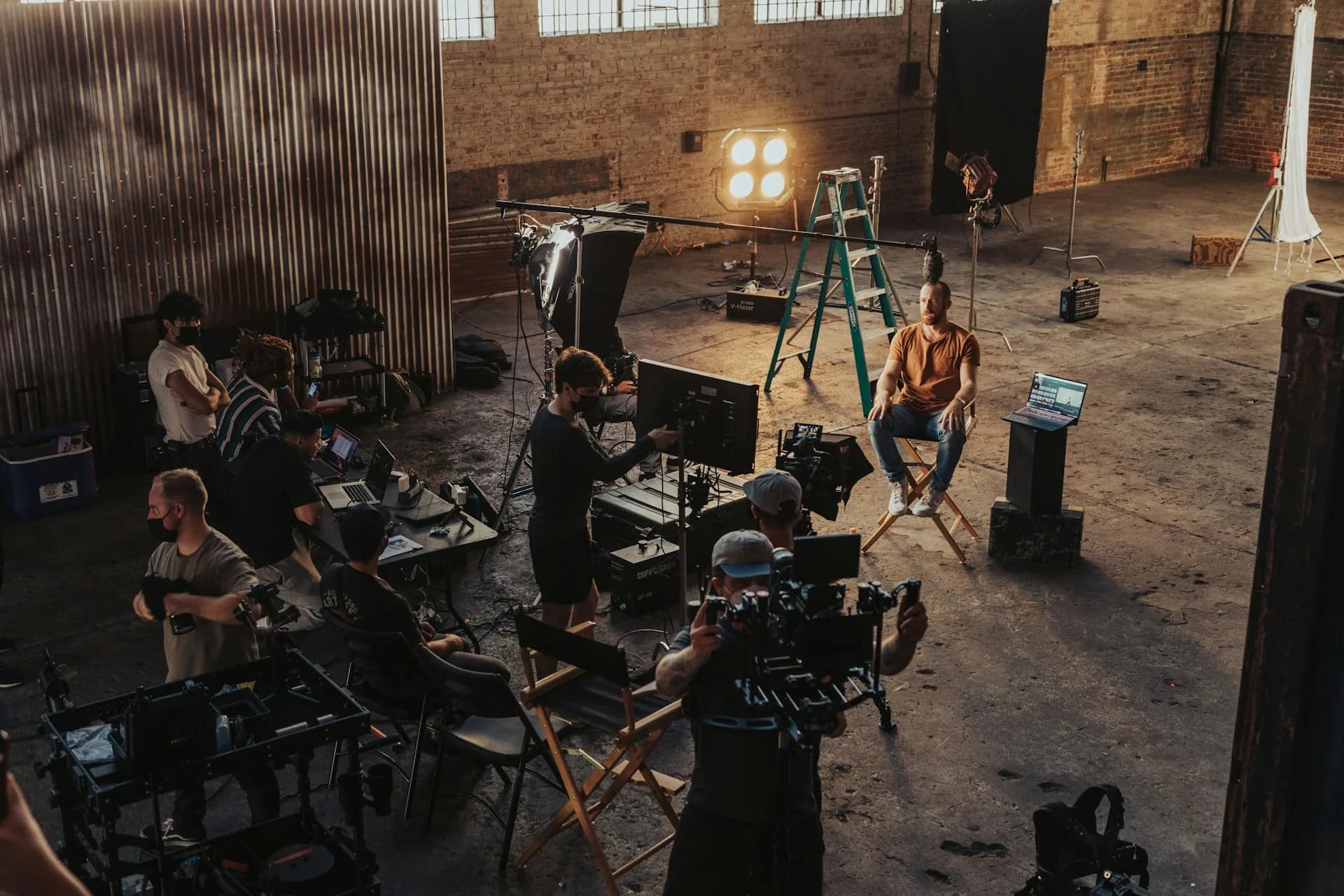
The shooting schedule is a document that sets out, hour by hour, what gets filmed and in what order. Who needs to be available at what time, how much prep time there is before filming starts, when the breaks are and what time it wraps.
Without that document, the shoot runs late. Not because people aren't working, but because nobody is clear on what comes next. A well-made shooting schedule is a silent coordinator that keeps the day moving without anyone constantly asking what's up next.
Common pre-production mistakes
- Starting the shoot without an approved script: the client turns up with changes that could have been sorted out on paper.
- Not scouting the location before the shoot: problems with light, noise or space are discovered when there's no longer an easy fix.
- Not confirming speakers' availability far enough in advance: a last-minute dropout derails the entire plan.
- Assuming the location has good acoustics without checking: echo or background noise ruins the location sound.
- Not leaving setup time at the start of the day: rigging lights and testing cameras takes 45–60 minutes that shouldn't come out of filming time.
- Forgetting to arrange access: arriving to find the space isn't available at the agreed time is a pre-production mistake, not a shoot-day one.
Frequently asked questions
How much lead time do I need to do pre-production properly?
For most corporate videos, 5–7 business days before the shoot gives me enough room. More complex projects — several shooting days, multiple locations, external casting or animation — may need two or three weeks of preparation.
Does pre-production come at an extra cost?
It's always included in the project quote. There's no such thing as a shoot without pre-production. Preparation time is part of the price, even if it doesn't always appear as a separate line item in the quote.
Do I need to be present at the location scout?
It isn't essential, but it helps. If the client knows the space well, they can share photos and videos that answer most of the questions. When there are doubts about the light, the sound or the layout of the space, I prefer to do the scouting in person.
What happens if pre-production reveals the location doesn't work?
It gets changed before the shoot, not during it. I have backup locations in Madrid that I know well and that I know work for corporate interviews, cutaway shots or on-camera presentations. Changing the location in pre-production costs nothing; changing it on shoot day does.
If you have a project under way and don't know how to structure the pre-shoot phase, I can help — from choosing the location to preparing the script. Write to me through the contact page.