Blog / Guide
Music licensing and copyright in corporate video
How to handle music rights in a corporate video project: sync licenses, royalty-free platforms and the mistakes to avoid before you publish.
Music can turn a mediocre corporate video into something people remember. The problem is that almost every corporate project that lands on my desk has the same blind spot: nobody has thought about the rights before publishing.
This isn't bad faith. It's a lack of information. You can't use a song from Spotify in a company video. A track that plays 'for free' on YouTube doesn't mean its rights have been cleared for commercial use. Here I explain how it works and what options you have.
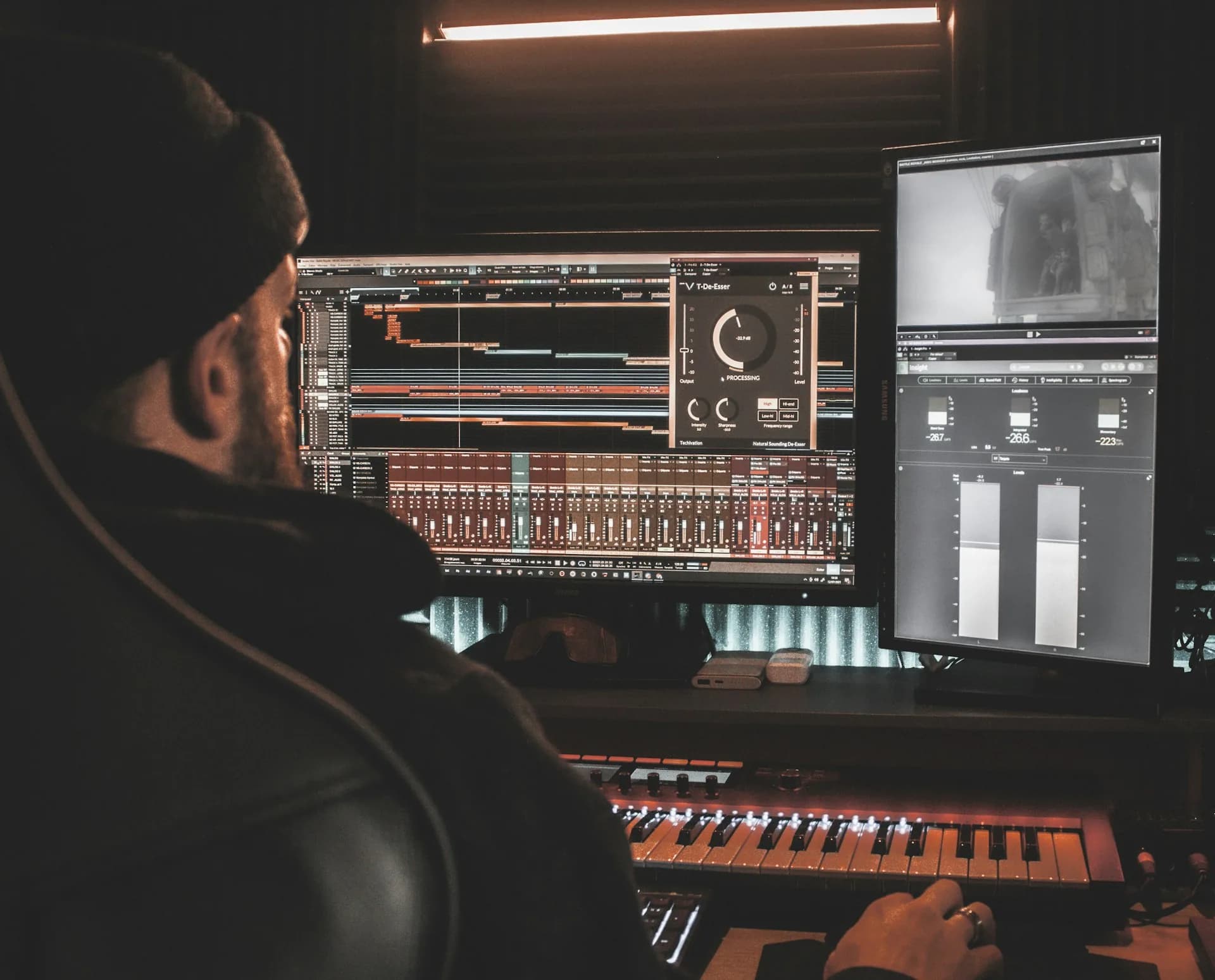
What it means to hold the rights to a piece of music
When you shoot a video and lay music over it, you're doing what's legally known as synchronisation. Essentially, you're syncing audio to moving images. To do that legally you need permission from whoever holds the rights to that music, which may be the artist, their record label, or both.
There are two types of rights that usually go hand in hand: the copyright in the composition (the melody and lyrics) and the master rights in the specific recording. If you want to use a well-known song in a corporate video, you need permission from the songwriters and permission from the label that owns that recording. They're two different entities and, in many cases, two different licenses.
For internal-only videos the risk is lower. For videos published on your website, YouTube, social media or shown at events with an audience, the risk of a claim is real and has practical consequences: anything from the video being taken down to losing monetization.
How to handle music in a corporate project
Sync licenses
A sync license is formal permission to use a specific song in a video. Getting one means contacting the rights holder directly. For commercial songs, that means dealing with record labels or collecting societies such as SGAE. The process takes time, you don't always get a reply, and the price can range from 200 euros to tens of thousands depending on the song and intended use. For a standard corporate video, it's rarely the way to go.
Royalty-free music platforms
The most practical option for most corporate projects is a royalty-free music platform. Artlist, Musicbed, Epidemic Sound and Pond5 offer libraries of tracks licensed for use in video. You pay an annual subscription and can use the music in your projects with no extra cost per delivery. I usually work with Artlist on corporate projects because the license covers commercial distribution with no platform restrictions, which makes the conversation with the client much simpler.
Original music
Another option is to commission an original piece. A composer can create a bespoke track for your brand for between 300 and 1,500 euros, depending on length and complexity. In return you get full rights to the composition and its recording. It's the most expensive solution in the short term, but the cleanest in the long term if the video will be widely distributed or if you want to use that audio across all your brand communications.
Common mistakes in corporate videos
- Using songs from Spotify or Apple Music thinking 'it's just a streaming platform': those licenses don't include synchronisation with video.
- Downloading tracks from the YouTube Audio Library without reading the terms: some have commercial-use restrictions or require visible attribution.
- Assuming there's no problem if the video is private: at events with an audience or internal company screenings, you still need the rights.
- Using royalty-free music bought for one project in all future projects without renewing the subscription: licenses are usually tied to an active subscription.
- Not keeping proof of license: if a copyright claim comes in on YouTube, you need to be able to show you have the right to use that track.
Frequently asked questions
Can I use music from the YouTube Audio Library in a commercial video?
It depends on the track. The YouTube Audio Library contains songs under different types of license: public domain, and Creative Commons with or without commercial restrictions. Before using a track, check its details. If it says commercial use isn't allowed, don't use it in a company video.
What happens if YouTube detects copyrighted music in my corporate video?
YouTube has a system called Content ID that detects registered music. If your video matches a protected track, one of several things can happen: the video is muted, the revenue goes to the rights holder, or the video is blocked in certain countries. In more serious cases the video is removed. This can happen to company channels as well as agencies and production companies.
Does an Artlist or Epidemic Sound license cover Instagram and TikTok?
Generally yes, but the exact terms depend on the plan you have. Artlist covers most platforms with its standard license. Epidemic Sound has separate plans for individual creators and for commercial use. Check the terms before publishing, especially if the client will post the video on their own channel rather than the agency's.
Can I use classical music without paying for rights?
The composition may be in the public domain if the composer died more than 70 years ago. But a specific recording may have its own rights if it was performed and recorded recently. To be safe, look for recordings released under Creative Commons licenses or use royalty-free platforms that include versions of classical music.
Music rights management is a part of production that doesn't show up in the budget until it shows up as a problem. If you have a project under way and aren't sure what music you can use, I can advise you from the outset. Tell me the details through the contact page.