Blog / Guide
Lavalier or boom mic: which to use for corporate interviews
I compare lavalier and boom microphones for corporate interviews: how each one works, when it fails and which I use depending on the shoot.
Every time I prepare a corporate interview I get asked the same question: lav or boom? The short answer is that it depends on the environment, the setup time I have and how much the person I'm interviewing moves. The long answer is this article.
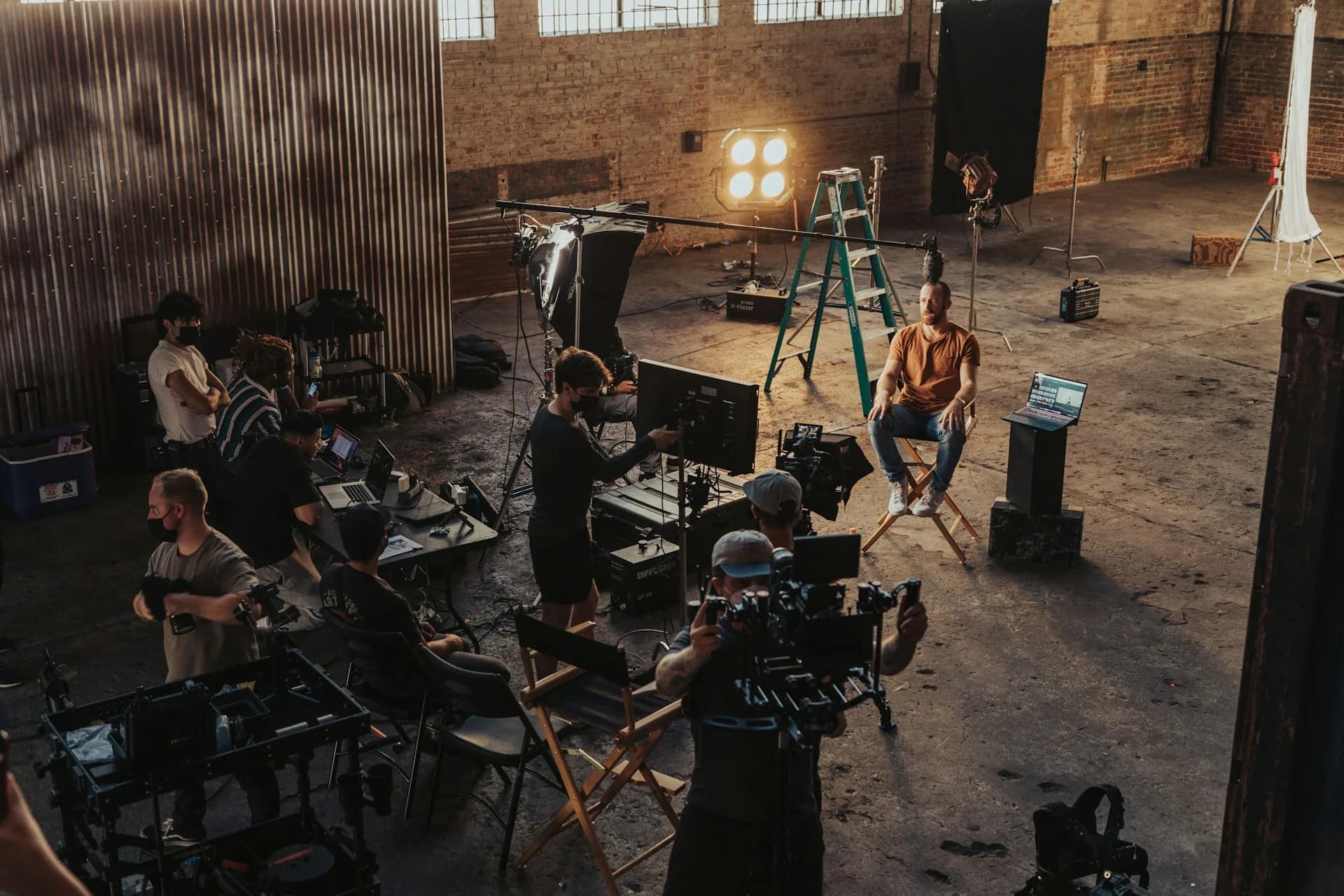
I've spent years filming interviews for companies in Madrid and have used both systems in almost every scenario imaginable: quiet meeting rooms, open-plan offices with air conditioning humming in the background, exteriors with traffic and makeshift sets in a warehouse. Each situation calls for a different solution.
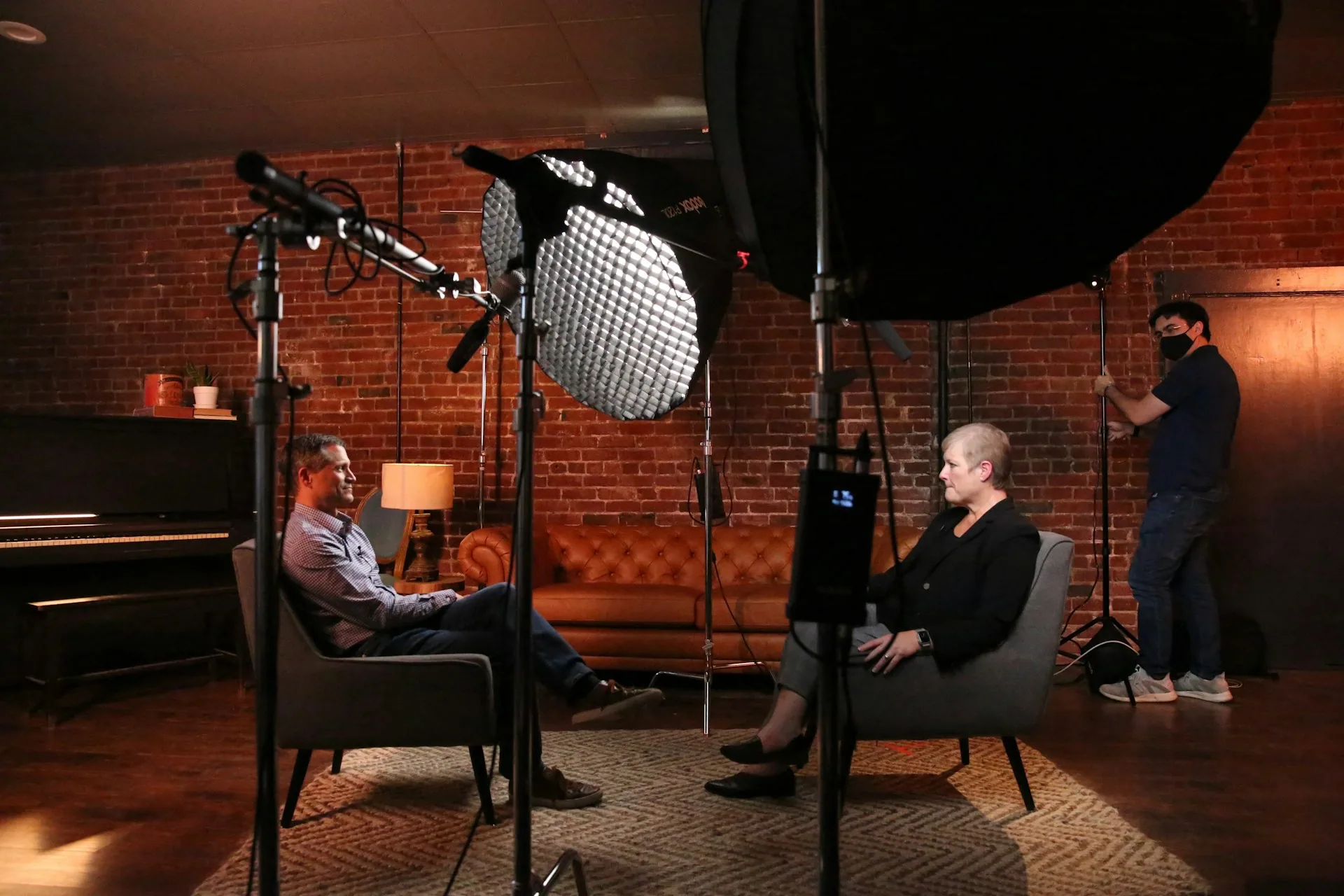
What each microphone is and what it's for
A lapel mic, or lavalier, is small and clips onto clothing near the chest. It picks up the voice up close, isolates ambient noise well and is practically invisible in shot once it's placed properly. I use it with a wireless transmitter pack when the person moves around or needs their hands free.
A boom is a directional microphone mounted on a pole that an operator holds out of shot, pointed at whoever is speaking. It captures a more natural, fuller sound because it isn't pressed against clothing, but it needs someone dedicated solely to holding it for the entire recording.
Neither is better in the abstract. The right question isn't which sounds better in general, but which best solves the situation in front of me.
How I choose on a corporate shoot
When the interviewee moves or gestures a lot
If the person walks, turns their head often or gestures with their hands close to their chest, the boom loses consistency: the operator has to chase the movement and the sound easily varies in level. With a lav, the microphone moves with the person and the level stays stable from start to finish. For standing testimonials or walk-and-talk interviews around an office, I almost always use a lav.
When clothing rustle is a problem
The classic lav problem is rustle: a scarf, a tie that moves or a jacket with a rough texture create a dry noise that bleeds into the audio track and is hard to clean up in post-production. In those cases I prefer the boom, which doesn't touch the interviewee and avoids rustle altogether. It's also my choice when two people are talking very close together and I don't want to mic them separately.
When setup time is short
On shoots with a tight schedule, where I'm in and out of several rooms in a morning, the lav wins on speed: fitting it takes under two minutes and I don't need anyone holding a pole. The boom requires a dedicated operator and more sound-check time before each take. If I'm working with just one other person on camera, a lav is practically mandatory.
Mistakes I see often
- Placing the lav too close to the chin: it picks up more breathing and less natural voice. The right spot is level with the sternum.
- Not testing for clothing rustle before recording: two minutes of testing with real movement saves hours of audio clean-up later.
- Using a boom without monitoring on headphones: without live monitoring it's easy to miss that the angle picked up room echo.
- Running a wireless lav alongside corporate Wi-Fi interference without checking the channel first: in network-heavy offices, change frequency before you record.
- Not bringing a backup recorder: if the transmitter fails halfway through the interview, a recorder such as a Zoom H5 running in parallel saves the take.
Frequently asked questions
Can I use both microphones at the same time in the same interview?
Yes, and on important productions I recommend it. I record the lav as the main track and the boom as a backup on a separate track. If the lav fails or picks up rustle, I have the boom to replace that section in the edit.
Which wireless lav do I normally use?
I work with the Rode Wireless Pro system for most corporate interviews. It's compact, has internal backup recording and easily lasts a full shooting day with battery to spare.
Does a boom always need a dedicated operator?
In practice, yes. Although there are fixed boom stands for controlled environments, on a real corporate shoot I need someone following the interviewee's movement, and that person can't do anything else at the same time.
Is the difference in quality noticeable in the final video?
An ordinary viewer can't technically tell which one was used if the audio is well recorded and clean. What they do notice, without knowing why, is when the audio has rustle, jumps in level or echo. That's where you pay for the wrong choice.
If you're preparing a corporate interview and don't know what sound setup your space needs, tell me through the contact page. With two details — number of people and type of room — I can tell you what kit to bring before shoot day.