Blog / Guide
Natural vs artificial lighting in corporate video: when to use each
Natural or artificial light for corporate video: how to decide based on the space, the length of the shoot and the result you need.
The decision isn't aesthetic. It's logistical. When I arrive on set and there are large north-facing windows, I work with what's there. When I'm filming in a meeting room with old fluorescent tubes and blinds that won't open, out come the lights. The question isn't what looks better in the abstract, but what you can control in that space on that day.
In corporate video, the problem with natural light isn't that it's bad. It's that it changes. A cloud, a shift in the hour, the sun moving to the other side of the building: from one shot to the next you get a different color temperature and a different exposure. It can be fixed in post-production, but that costs time that often isn't worth spending.
What really changes between natural and artificial light
Natural light has a quality that's hard to replicate: a large source, soft gradations, a full spectrum. Indoors with good windows, a well-exposed interview can look better than with a mediocre lighting kit. The problem is consistency: at 9 in the morning you have one thing and at 11 you have another.
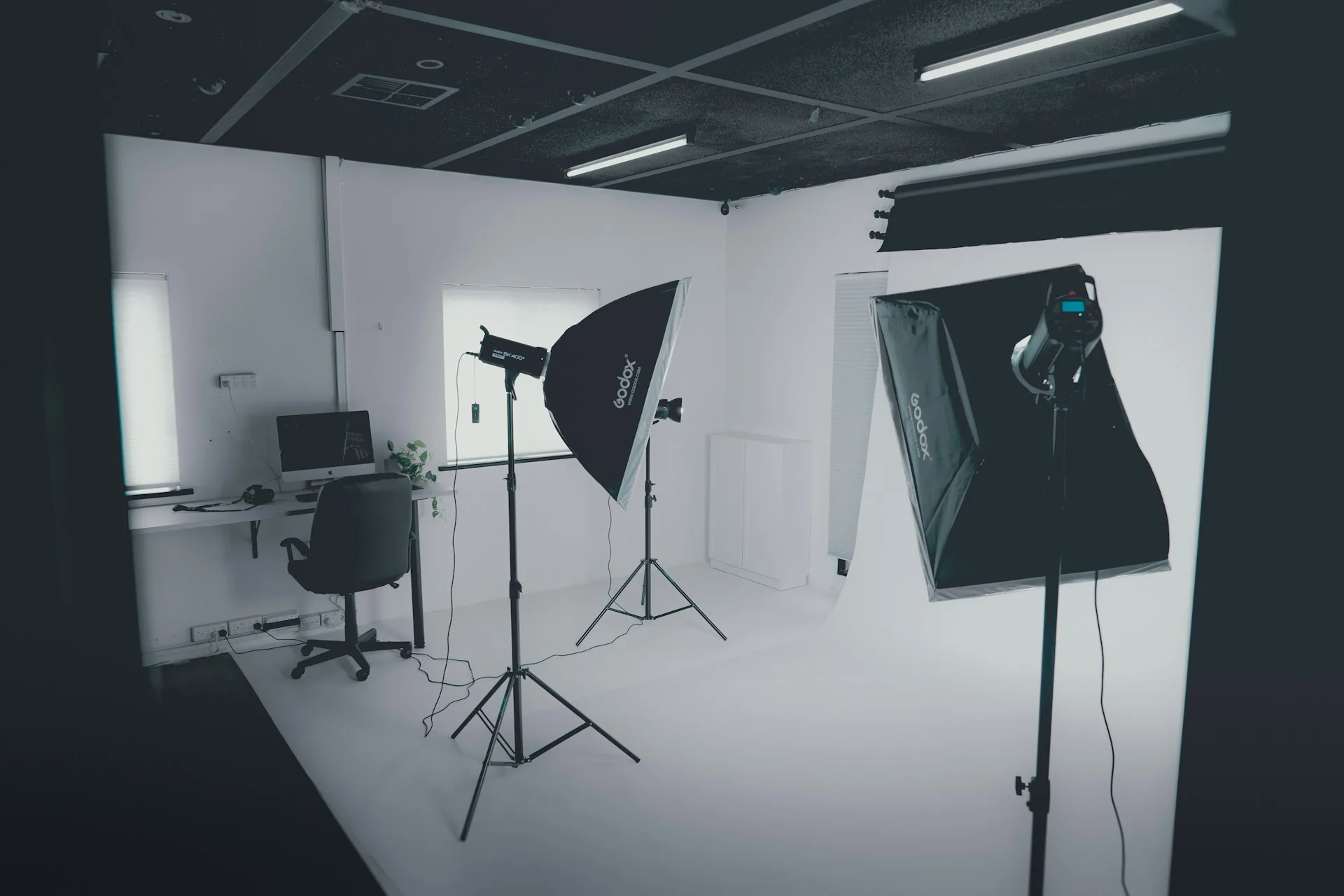
Artificial light gives you control. You decide the direction, the intensity and the color temperature. If the space is dark, or you have to film for several hours straight and everything needs to match, there's no alternative. A basic kit of three bi-color LED lights, diffusers and stands fits in a car trunk and sets up in 20 minutes.
How to work well with natural light
Choose the time of day
Direct midday light comes in at harsh angles and creates hard shadows on the face. For interviews I prefer the morning or late afternoon, when the light comes in at an angle and is softer. In Madrid in summer there's a good window between 8 and 10 a.m., and another between 6 and 8 p.m.
Control the direction and the amount
A side window is a free softbox. Placing the interviewee at 45 degrees to the window gives classic light modeling. If the window is in front of them, I add a silver or white reflector on the opposite side to fill in the shadows. If there's too much light and it's blowing out, a white curtain diffuses it without losing the quality of the source.
Reflectors and diffusers as allies
A kit of 80 cm collapsible reflectors weighs almost nothing and lets you shape natural light much more precisely. It doesn't replace a light, but at many locations it's the difference between a flat image and one with real depth.
When artificial light is the right choice
- The space has no windows, or the outside light is very harsh and can't be diffused.
- The shoot lasts more than two hours and you need every shot to match in color and exposure.
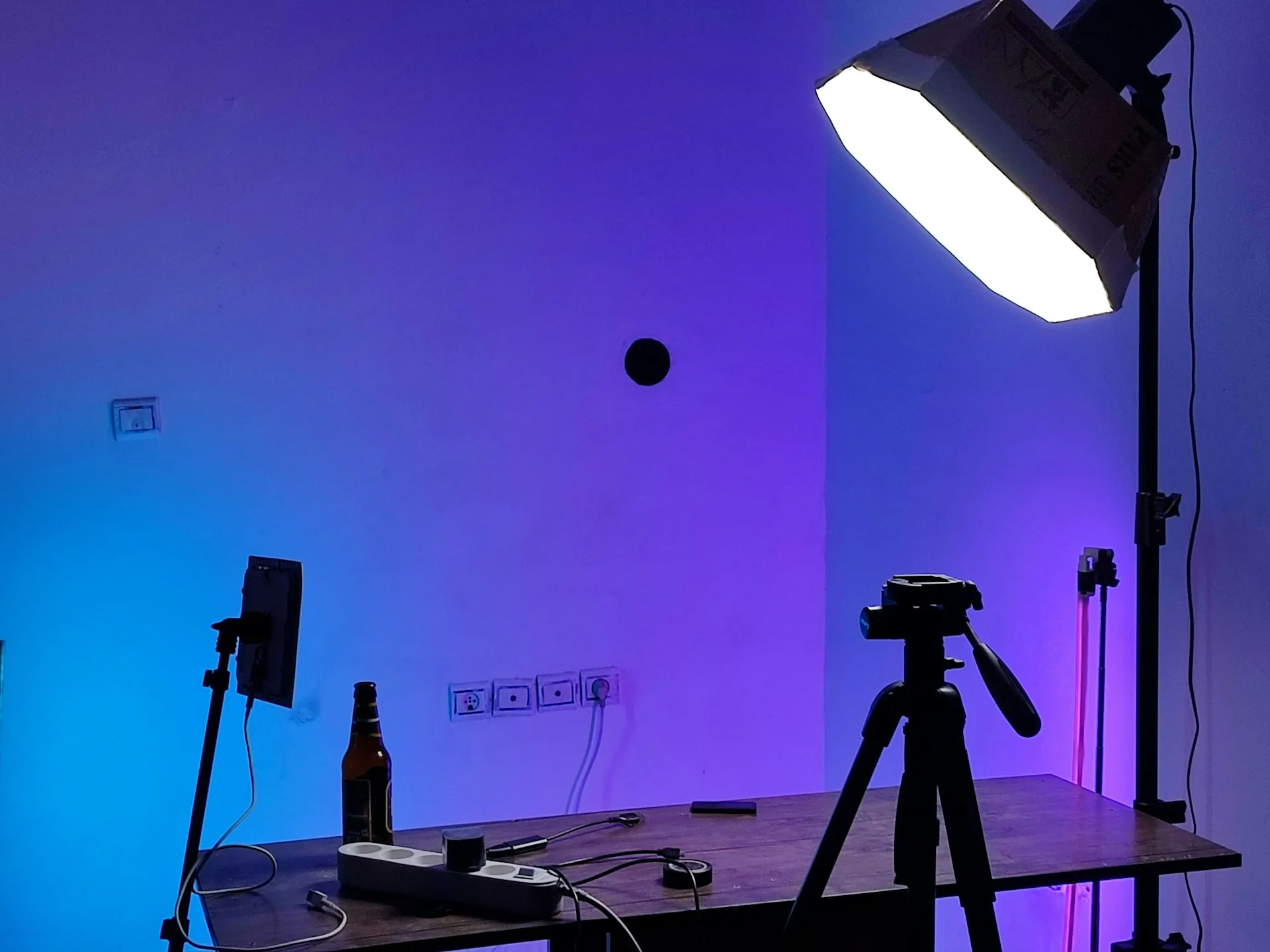
- There's mixed lighting: overhead fluorescents plus a side window. It's easier to block the existing sources and control everything artificially.
- You're filming at several different locations on the same day and need visual consistency across all of them.
- The client wants a polished result with a neutral background in a space that doesn't naturally have one.
Frequently asked questions
Can I use only natural light for a professional corporate video?
Yes, if the conditions are right: large windows, side light and a controlled schedule. The result can be very good. The problem arises when you can't control the space or the shoot stretches over several hours.
What's the minimum artificial lighting kit I need for an interview?
For a standard interview: two 60–100 W bi-color LED lights with a softbox or diffuser (key and fill), and a third small light to separate the subject from the background or light the background itself. A complete kit with stands can cost around €400–600.
Does color temperature really matter that much in corporate video?
Quite a lot. Mixing cool window light with warm light from a lamp gives odd-looking skin tones that are very hard to correct in DaVinci Resolve. Ideally you set a temperature in camera — 5600K for daylight or 3200K for tungsten — and match all the sources to it.
What do I do if the location has mixed lighting I can't control?
First option: lower the blinds, switch off the overhead fluorescents and work only with your own lights. Second option: if you can't eliminate the other sources, use a dominant light with far more output than the rest and accept that there will be some mixing in secondary areas of the frame.
If you're planning a shoot and aren't sure how to handle the lighting in the space, write to me through the contact page. With photos of the space and the planned filming time, I can tell you whether it's worth bringing lights or whether natural light will do.