Blog / Guide
Lighting for corporate interviews: how to get a clean shot
A practical guide to lighting corporate interviews: minimum kit, light placement, color temperature and the on-set mistakes that ruin the shot.
When people tell me their video 'doesn't have that something other videos have', the problem is almost always the light. Not the camera. Not the edit. It's how the interview shot is lit, which is where the viewer spends most of their time.
I've spent years shooting corporate interviews in Madrid: executives, spokespeople, technical teams, founders. What makes an interview look professional isn't expensive gear. It's having a large, well-placed light source that flatters the face without casting odd shadows on the background wall.
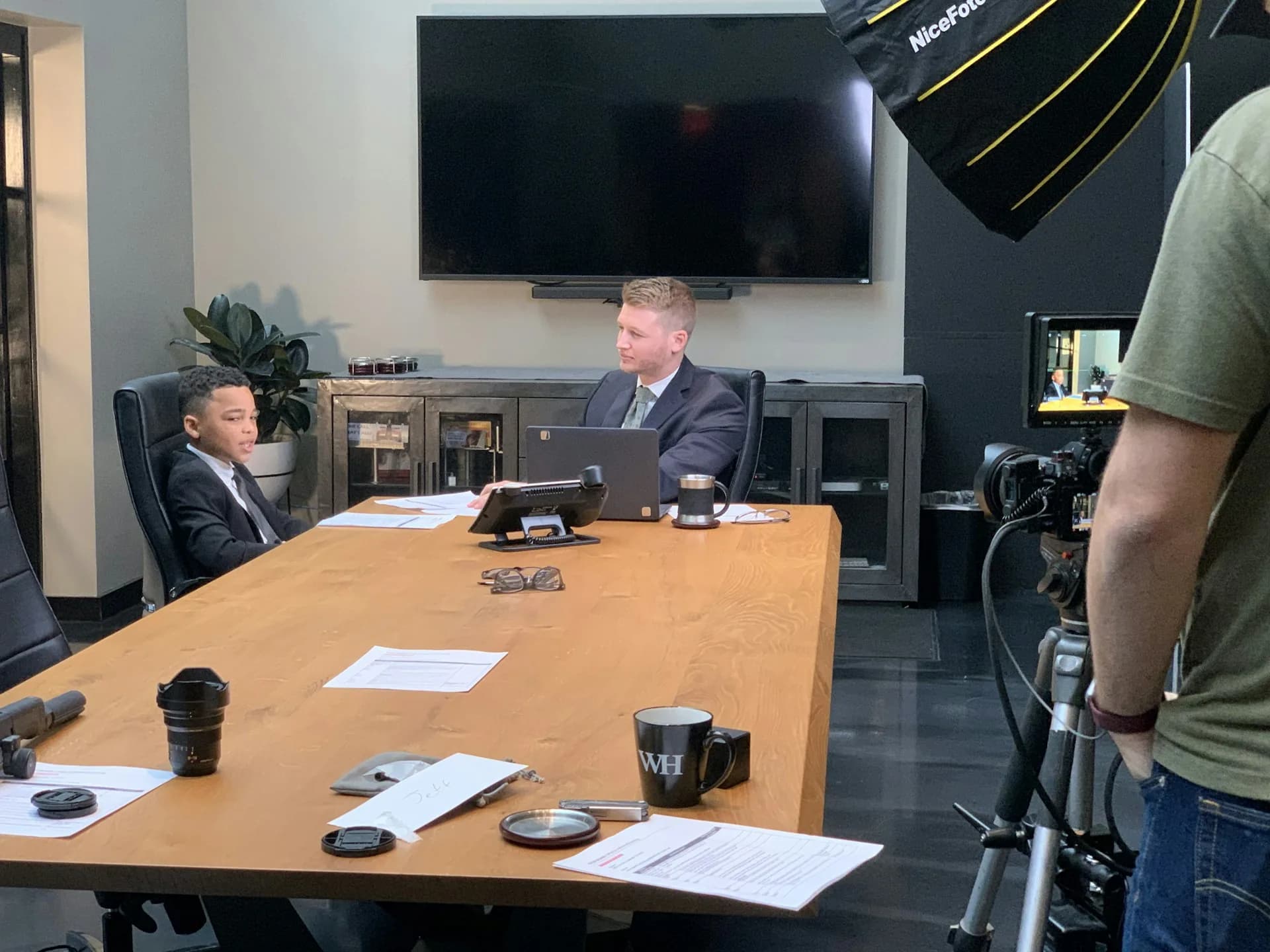
What corporate interview lighting is and why it matters
Lighting for corporate interviews has one specific goal: the interviewee's face should look clear, with defined features and no hard shadows to distract. It sounds simple, but doing it well in real conditions (a meeting room with windows, an office with fluorescent ceiling lights, a corporate hallway) means making quick decisions.
The difference between a shot that looks like a news bulletin and one that looks like a proper production isn't the number of lights. It's understanding where the key light comes from, how to fill the shadows without flattening the face and what to do with the background so it doesn't compete with the speaker.
And it has direct consequences in the edit. You can try to fix a badly lit shot in DaVinci Resolve, but only up to a point. Beyond that, skin tones go strange, noise multiplies when you try to lift the shadows and the piece looks forced.
How I light a corporate interview
The key light: large and soft
The first decision is where the key light goes. I use LED panels with a softbox or diffusion fabric. Size matters: a large panel one metre from the subject is softer than a small one two metres away, even at the same output. I place it at roughly forty-five degrees to the camera-subject axis, slightly above eye level so the nose casts a short shadow downwards. No overhead light, which flattens the face, and no direct frontal light, which kills all the depth.
The fill: no more than a third of the key
The side opposite the key light always needs some light. Without fill, half the face falls into shadow and the contrast ratio looks wrong on camera, even if it doesn't look that way on set. I use a small LED panel at its lowest setting or a silver reflector that bounces back some of the key light. The fill can't match the key in intensity; if it does, the face looks flat and lacks depth.
The background: clean separation
The background in a corporate interview should support the shot, not distract from it. Three options that work: light the background with a separate fixture to separate the person from what's behind them; use the natural blur of a fast lens (f/1.8 or f/2.8); or find a real company background (a wall with the logo, a tidy bookshelf) that adds context. What doesn't work is an untreated white wall or a backlit window left uncompensated.
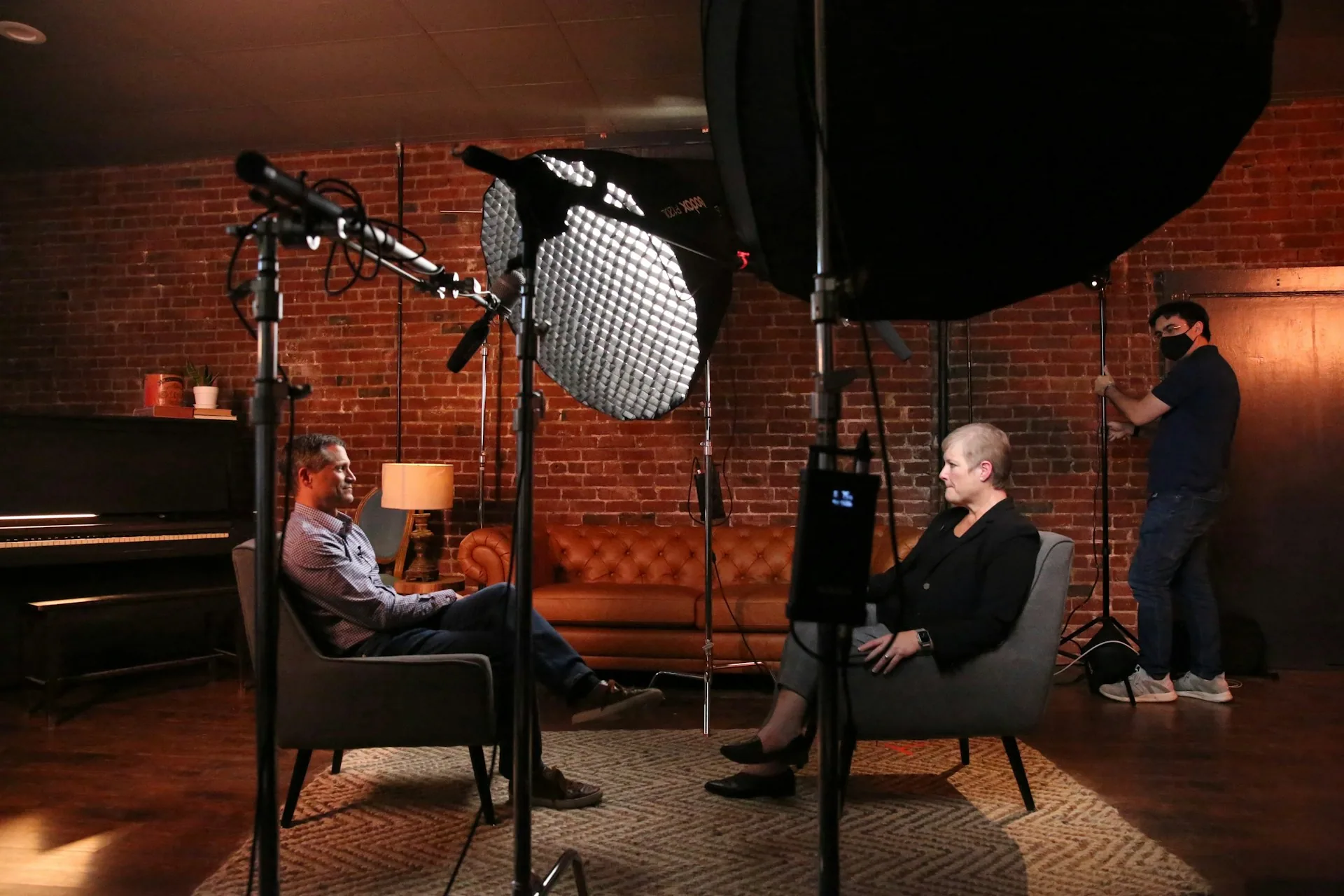
Mistakes that ruin a corporate interview
- Relying on the room's lighting as it is. Fluorescent ceiling lights flatten the face and mix color temperatures. You almost always have to switch them off and start again.
- Placing the interviewee with a window behind them. The camera can't expose correctly for both the face and the background; the usual result is a dark face or a blown-out background.
- Using a small light very close. The hotspot on the face is visible, shadows turn hard and skin texture is overemphasised.
- Mixing color temperatures without control. If the panels are at 5600K and there's 4200K window light mixed in, the skin takes on green casts in parts of the frame that don't correct well in post.
- Not checking the shot through the camera before calling in the interviewee. What you see with your eyes on set isn't what the sensor records. I always check the monitor before we start.
Frequently asked questions
What's the minimum kit needed to light a corporate interview?
A 60×60 cm or larger LED panel with a softbox, a reflector and a light stand is the functional minimum. With that, you can set up basic three-point lighting in ten minutes. If the space has usable windows, natural light can act as fill or backlight and you need even less kit.
What color temperature is best for business interviews?
5600K (daylight) if there are windows on set you can't cover. 3200K or 4000K if the space is fully controlled. What matters is that all lights are at the same temperature or very close. Mixed sources make parts of the face come out in different tones, and that doesn't fix well in post.
Can I use natural light for a corporate interview?
Yes, under certain conditions. A large side window works as a key light if the daylight is soft and diffused. The problem is that natural light changes in real time: in fifteen minutes it can go from perfect to unusable. For a short interview it may do; for a two-hour session, LED panels give you consistency a window can't.
Do I need a gaffer, or can I light the interview on my own?
For a standard corporate interview with a single subject, you can rig and adjust the setup on your own. What changes is the time: solo, it takes twenty to forty minutes; with a gaffer, ten. If you're short on time, the set is complicated or there are more than two interviewees with different backgrounds, having someone dedicated to lighting saves more in time than it costs.
If you're planning an interview shoot for your company and want to know how I'd approach it, write to me through the contact page with a couple of lines about the space and the number of people. I can give you an idea of the setup before quoting anything.