Blog / Guide
Outdoor filming for companies: what you need to control
Filming outside the office can add a lot of value to a corporate video, but it also multiplies the variables. How to manage natural light, ambient sound, logistics and permits on a corporate production.
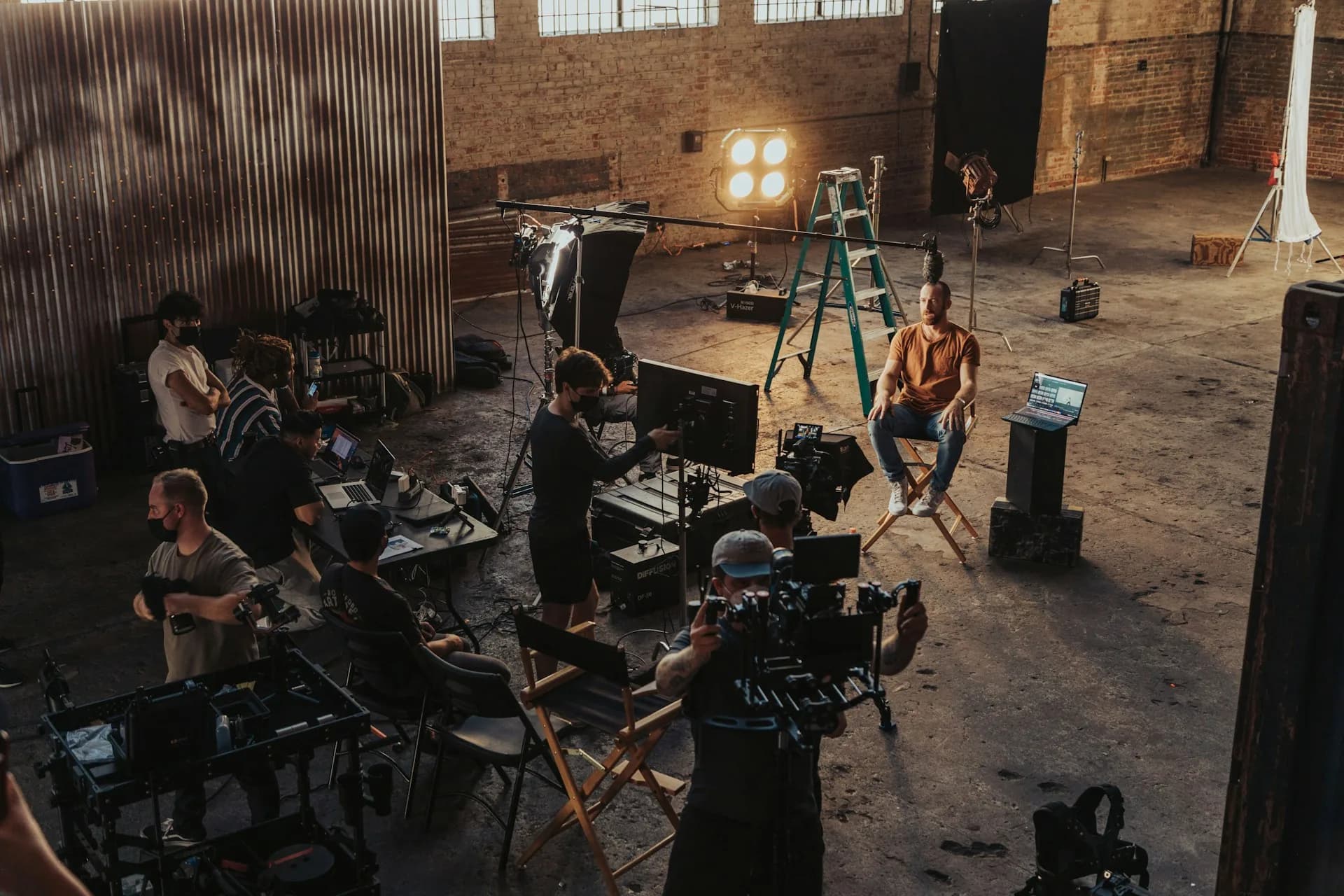
Some projects breathe better outside four walls. A testimonial with the city in the background, a new headquarters opening in natural light, a product sequence in a space that says something. Filming outdoors adds a texture to a corporate video that no studio set can imitate.
But it also multiplies the problems. The sun moves, planes don't check the shooting schedule, and the permit you applied for three weeks ago still hasn't come through. Here are the variables I control before any street shoot begins.
Why film outdoors
A recognizable exterior anchors the company in a real context. When a consultancy appears with Madrid in the background, or a logistics company with its warehouse and trucks, the viewer takes in information that no text can convey as quickly: size, location, energy.
What's more, well-handled natural light has a quality that's very hard to imitate with equipment. A soft sunrise or an afternoon with high cloud can give a corporate interview a look that justifies all the extra work.
How to control the variables
Natural light
Golden hour isn't an optional extra: it's the only window in which the sun works in your favor. Between 7 and 9 a.m. in summer, or between 5 and 7 p.m. in spring, the light is low-angled, soft and very warm. Outside those windows, direct sun flattens faces and creates hard shadows that can't be fixed in post-production. I use a 120 cm diffuser to soften it when there's no other choice, but if I can pick, I'd rather move the time. For cutaway shots I look for building shade or even overcast skies. A clear blue sky with the sun directly overhead is the hardest scenario of all.
Ambient sound
Street noise is the biggest enemy of an outdoor corporate video. An interview with traffic in the background is unusable, no matter how good the microphone is. The steps that work: a lavalier mic with a windscreen, a parallel recording on an H6 as backup, and a sound check of the location beforehand where I identify fixed noise sources — building work, outdoor café seating, above-ground metro lines. If the wind is above 20 km/h, the outdoor slot is off. No exceptions. In that case I move the interview to a space with controlled light or reschedule.
Space logistics
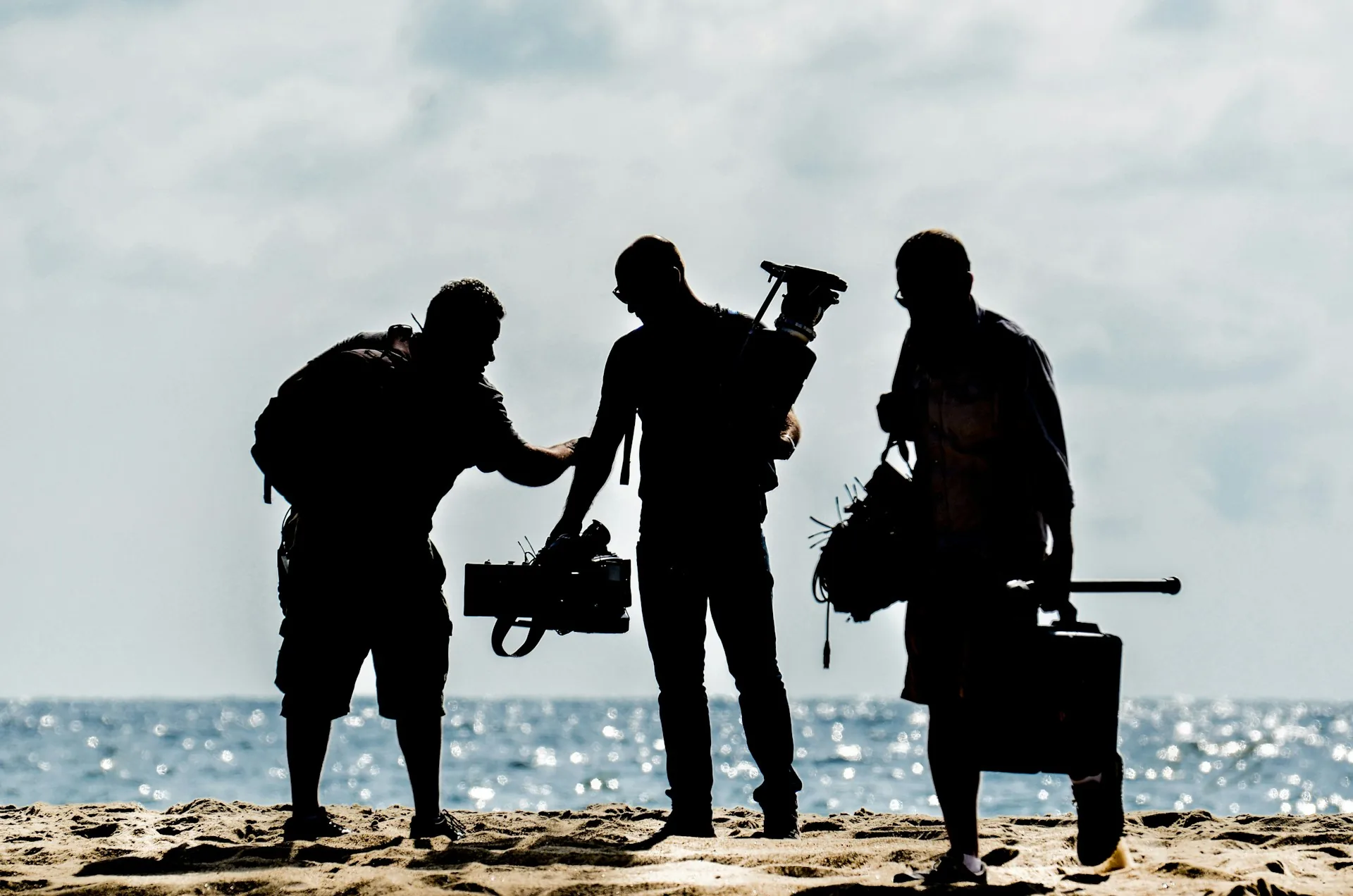
Filming permits in Madrid are processed through the City Council and can take between 5 and 15 business days depending on the type of shoot. To use public streets with a tripod and a crew of more than one person, you need to apply. For private property — company headquarters, parking lots, rooftops — written authorization from the owner is enough. On shoot day I check: van access, an unloading point, distance to power, restrooms for the crew and shade for the breaks.
When it makes sense (and when it doesn't)
- It makes sense when the company wants to show its facilities, warehouse or real working environment.
- It works well for headquarters openings, project presentations or launch events.
- It's worth it when the client's brand image has an urban or mobility dimension.
- It stops making sense if the budget doesn't include time for scouting and handling permits.
- For internal training or legal communications videos, exteriors add cost without adding value.
Frequently asked questions
How much does it cost to add an outdoor day to a corporate shoot?
It depends on the type of exterior. The company's own terrace adds no cost. A public space in Madrid with a crew of more than one person requires a permit, with a municipal fee of between €50 and €150 depending on the use. An iconic outdoor location with security management and a partial closure can add between €500 and €1,500 to the production budget.
What happens if it rains on shoot day?
I always have a plan B. Before the shoot I agree with the client a rescheduling window of 3 to 5 business days at no extra cost. If the rain is light and the shot doesn't include people, it's sometimes possible to keep working. For single-day shoots with no room to reschedule, I prepare an alternative interior with artificial light that gives an acceptable result.
Can you film outdoors in Madrid in winter?
Yes, with conditions. Winter in Madrid has low light — the sun sits around 25–30 degrees above the horizon — which can be very photogenic between 11 a.m. and 2 p.m. The problem is the temperature: an outdoor interview at 4 degrees for more than 20 minutes has obvious limits for the interviewee. For winter exteriors I prefer cutaways and opening shots, not long interviews.
Do I need a permit to film with a drone in an urban outdoor area?
Yes, always. In urban areas of Madrid, using a drone for filming requires coordination with Spain's State Aviation Safety Agency (AESA) and authorization from the City Council. The process takes 2 to 4 weeks. There are also permanent no-fly zones near Barajas airport and the historic center. I hire a certified operator who handles all the paperwork.
If you're planning a corporate video that includes outdoor locations in Madrid and want to know whether the space you have in mind is viable, write to me through the /en/contacto page.