Blog / Guide
Event filmmaker: what they do and when you need one
What a filmmaker does at a corporate event, what they deliver afterwards and how it differs from hiring a camera operator by the hour. A practical guide based on real shoots in Madrid.
When a company calls me to cover an event, the first question is almost always the same: "what's the difference between a filmmaker and hiring a camera operator by the hour?" The short answer is that a camera operator films what happens, while a filmmaker decides what story you want to tell before it happens.
The difference shows in the result. An event filmed without a plan turns into thirty minutes of wide shots nobody watches. An event covered by a filmmaker turns into a short piece published that same week and a longer recap the brand uses for months.
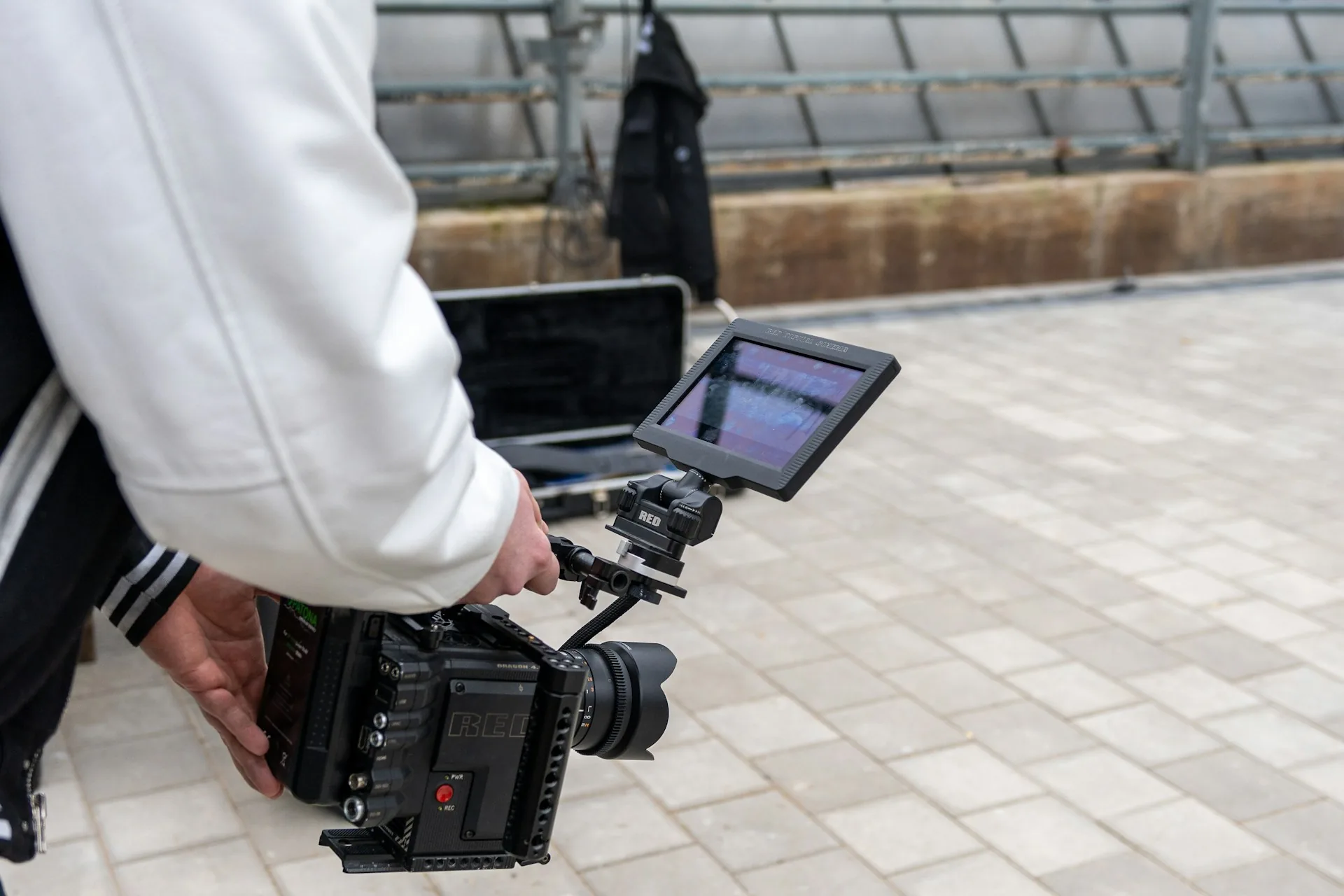
What a filmmaker does at an event
A filmmaker doesn't show up to film; they show up to produce. That means that before the event they've already spoken to the client, seen the venue, know who's speaking and when, and are clear on which final pieces will be delivered. Covering an event without that preparation is what produces videos that all look the same.
During the event, the job isn't just pressing record. It's deciding moment by moment what deserves to be filmed and what doesn't. There's a keynote that will definitely go on social media, a panel discussion that probably won't, a coffee break with interactions that make for good B-roll, and a photocall the brand wants to push. That real-time judgement is what separates useful coverage from a bag of raw files.
After the event, they deliver the formats the client will actually use. Not a single forty-minute master, but what's going to be published: a short teaser the next day, a one- to two-minute recap for LinkedIn, vertical cuts for Instagram and the testimonials edited separately.
How I set it up
Before the event
I ask for the run of show the day we confirm the project. I need times, speakers, locations within the venue and the moments the communications team considers non-negotiable. With that, I put together a coverage plan: where each camera goes, what audio is needed, when I'll leave the main camera to grab B-roll and when the testimonials will be filmed outside the room.
During the event
I work with two Sony cameras when there's a fixed stage (one wide, one close-up) and with a single camera when the event is on the move. I always take stage audio from a line feed off the sound desk, never from the camera mic, because if that audio is lost the event can't be edited. Meanwhile I capture B-roll of the audience, hands, logos, branding and details of the venue. That's what fills out the recap later.
After the event
I edit in DaVinci Resolve. I usually deliver a fifteen- to thirty-second teaser in under 48 hours (so the brand can post while the event is still fresh) and the main recap in one to two weeks, with one round of revisions included. If there are testimonials or full talks, I deliver them as separate pieces, cleanly cut using the audio from the desk feed.
Common mistakes I see
- Hiring the filmmaker the week of the event. With no time to plan the coverage, what you get is generic.
- Asking for just "a video of the event" without deciding first which channel and what length. It ends up as a piece that doesn't fit anywhere.
- Skipping the desk audio feed. A camera mic in a large room isn't good enough, and if you lose the speaker's audio you lose the piece.
- Bringing a single camera to an event with a fixed stage and a panel discussion. If the main shot fails, there's no plan B.
- Not setting aside space to film testimonials outside the room. The best cuts for campaigns usually come from there, not from the stage.
Frequently asked questions
What's the difference between a filmmaker and a camera operator hired by the hour?
A camera operator films what you tell them on site. A filmmaker plans the coverage in advance, directs the shoot live and delivers edited pieces ready to publish. If you only need raw footage, a camera operator is enough. If you want material that gets published, you need someone who also edits and thinks about the end result.
How many cameras do you need to cover a corporate event?
It depends. An event with a fixed stage and talks of an hour and a half or more calls for two cameras (wide and close-up). A more informal event, or one where people move around, is better covered with a handheld camera and, if the budget allows, a second locked-off camera for wide shots. More than three cameras is usually overkill unless there's live vision mixing.
How long does it take for the event video to be ready?
I usually deliver a short teaser within 24 to 48 hours and the main recap in one to two weeks. If you also want full talks or testimonials edited separately, add another three to five days. Shorter turnarounds are possible, but it's best to flag it before the shoot so the editing days can be booked.
Is it better to hire a freelance filmmaker or a production company for an event?
For one-day events with one or two cameras, a freelance filmmaker covers the whole job and you have a single person accountable. For large, multi-location events or ones with live vision mixing, a production company with several crews makes more sense. The useful question isn't "freelancer or production company" but who will be there on the day directing the coverage.
If you have a corporate event coming up and would rather talk it through before asking for a quote, get in touch through the contact page with the date and a couple of lines about the format. From there, we'll work out which coverage makes sense and which pieces you'll be able to publish afterwards.