Blog / Guide
Gimbal, slider or tripod: when to use each stabilization tool
A practical guide to choosing between a gimbal, a slider and a tripod on corporate video productions, based on the type of shot, the space and the movement you need.
The first time someone asked me whether they needed a gimbal for their corporate video, the answer was no. There was a meeting room, a single camera and five people who had to speak to camera. The gimbal would have been nothing but a hindrance.
Stabilization isn't valuable in itself. It's a decision that depends on what you're filming, the space, the time you have and the kind of movement you want. Here's how I think about it when I have to choose.
What each tool does
The tripod is the foundation of almost everything. It locks the camera in place, eliminates shake and frees up mental energy to think about framing, light and the person in front of you. For interviews, statements, product presentations and any shot where the camera doesn't move, the tripod is the right choice.
A slider adds controlled horizontal or vertical movement. That 60 or 80 centimeter move turns a static shot into something with life without looking handheld. It works well for product shots, office cutaways or opening sequences.
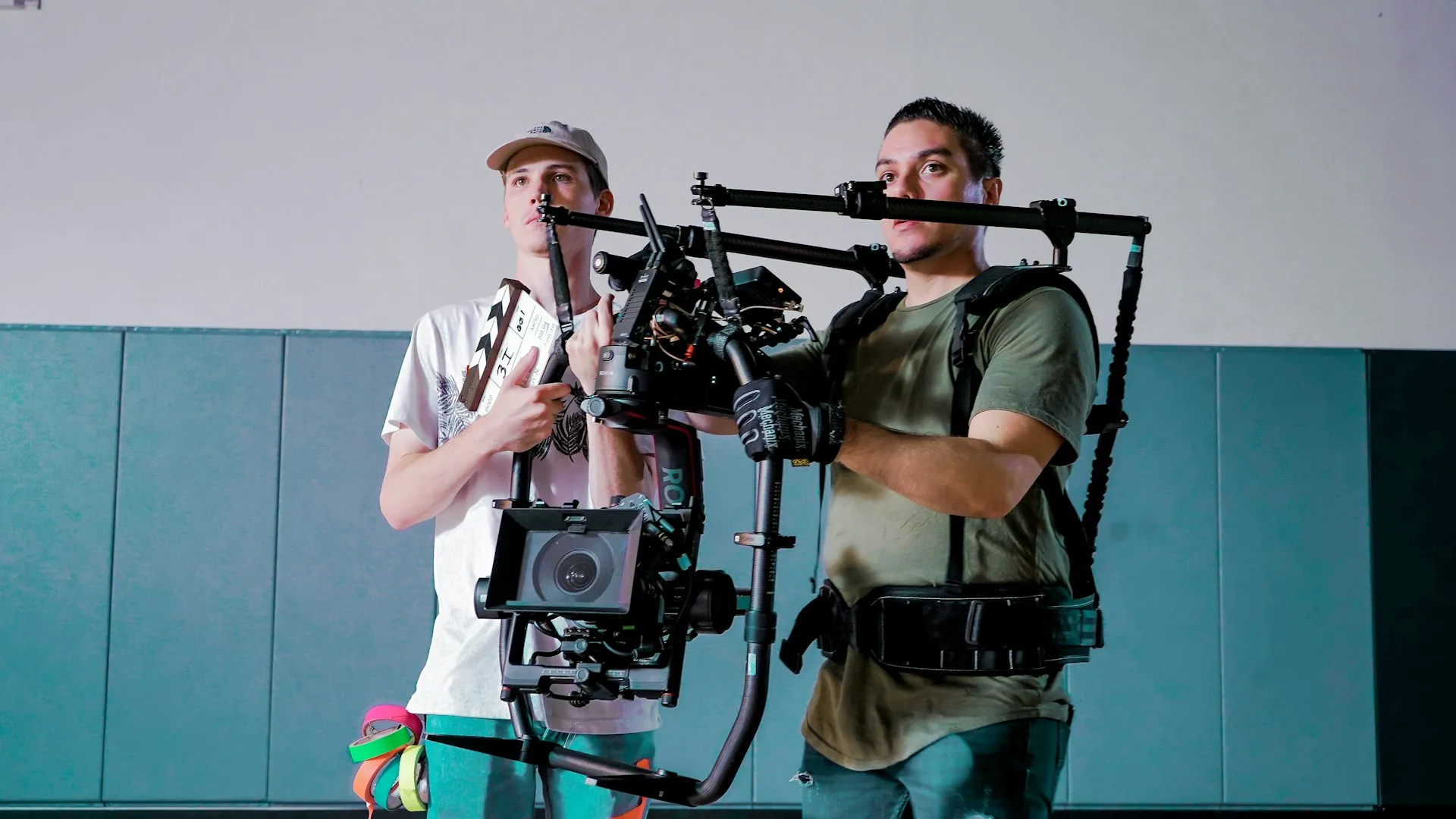
A gimbal stabilizes the camera while you move. It compensates for vibration and lets you walk smoothly or follow someone who's moving. It's the right tool for events, spaces you want to move through or situations where narrative movement matters.
How to choose depending on the situation
Tripod: when the camera doesn't move
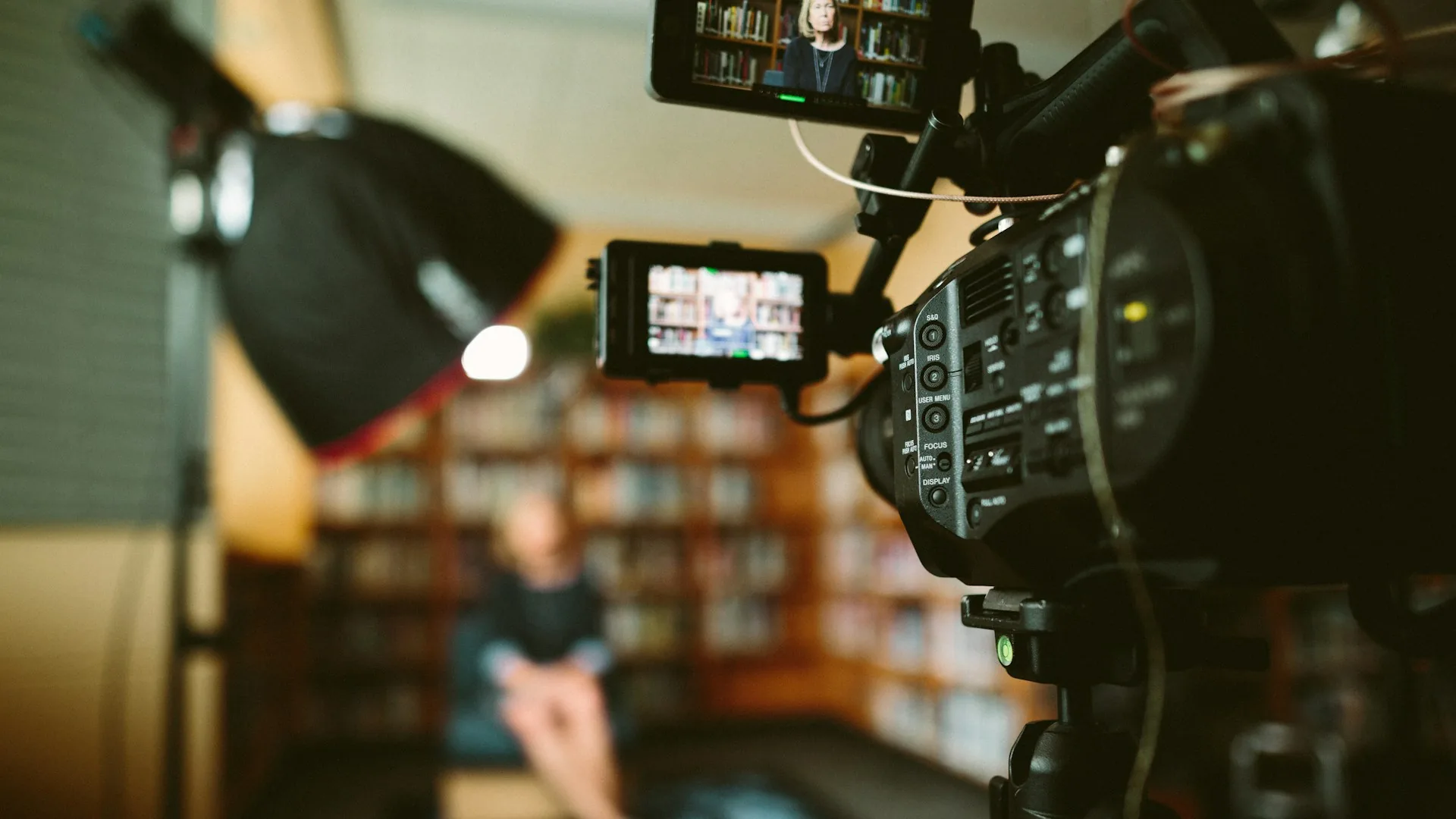
If the camera doesn't travel during the take, the tripod always wins. It's quicker to set up, more stable at any focal length and quieter than any gimbal. For corporate interviews I almost always work with two tripods: one for the main camera and another for the Sony A7 with a long lens. No more movement is needed.
Slider: when the movement is short and controlled
When I have to film cutaways in offices or meeting rooms, the slider gives me something the tripod can't: the reveal. An 80 centimeter tracking shot across a desk or a closing shot over a laptop adds depth through movement. I mainly bring it when the video has a sequence introducing a space or a product.
Gimbal: when the camera follows the action
Events are the gimbal's natural territory. When people are moving around, when I want to follow someone down a corridor or capture the atmosphere of a packed room, the gimbal lets me do it smoothly. On eight- or ten-hour event shoots, it's usually the tool I have in my hands the longest. The trade-off: it takes practice, it's tiring on the arms and it drains batteries.
Mistakes I see all the time
- Bringing a gimbal to static interviews: it adds setup time with no real benefit.
- Not balancing the gimbal before the shoot: a poorly balanced gimbal produces erratic movements that are hard to fix in post-production.
- Using a slider in small spaces without planning the move: if there's no room for the tracking shot, it ends up half-finished.
- Mixing handheld and slider shots in the same project with no narrative logic: the visual result feels inconsistent.
- Forgetting to charge the gimbal batteries: it drains a lot outdoors and needs its own batteries.
Frequently asked questions
Can I do without a slider on a corporate production?
Yes. In most company videos the slider is an extra, not a necessity. A well-lit, well-framed video shot from a tripod is perfectly competitive without any additional camera movement.
What camera weight can a mid-range gimbal handle?
Most mid-range gimbals, such as the DJI RS 3 or the Zhiyun Crane M3, take a payload of 2 to 3 kilograms. With a Sony A7 and a standard lens you're comfortable. With a long zoom or extra filters, check the specs before you buy.
Can I use a tripod with a basic fluid head?
Technically yes, but your pans will be jerky. If you pan smoothly in camera, it's worth investing in a quality fluid head. With a Manfrotto 502AH, for example, pans are clean and predictable.
Does a gimbal replace optical stabilization or the camera's IBIS?
No, they complement each other. The gimbal corrects large movements, like walking or turning. IBIS or optical stabilization corrects small vibrations. Using them together gives the cleanest result, although you have to set them up correctly to avoid the wobble effect that happens when they counteract each other.
If you're preparing a shoot and aren't sure what stabilization gear you need, write to me through the contact page. With the project brief I can tell you exactly what to bring and save you setup time on the day.