Blog / Guide
The minimum gear you need to shoot a company video (without overspending)
The short list of what you actually need to shoot a company video: essential camera, audio and lighting. No overkill.
The question I hear most when someone is about to shoot their first company video isn't 'what do I want to say?' but 'what gear do I need?'. The short answer: less than you think.
I've shot corporate videos with very different setups, from productions with several camera bodies to interviews handled with a kit that fits in a 25-litre backpack. What makes a company video good isn't the amount of gear, it's knowing which piece matters in each shot.
Why choosing the right gear matters
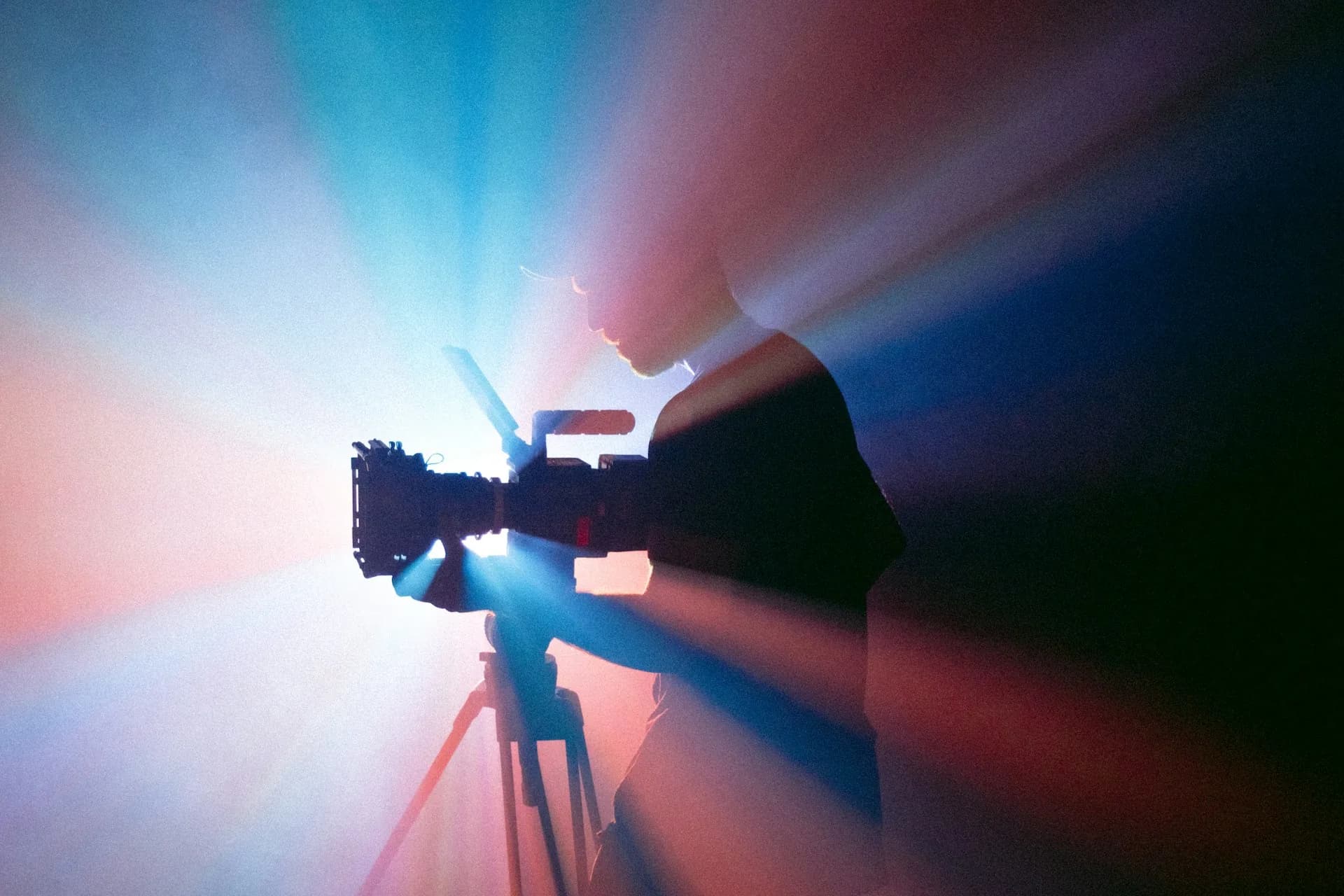
Overequipping has a real cost: more time setting up and packing down, more cables to manage, more technical decisions that pull you away from what matters, which is the person in front of you or the story you're telling. An oversized kit can also make a company spokesperson nervous when they're wearing a lavalier mic, have a softbox 60 cm from their face and three cameras pointed at them.
On the other hand, falling short on audio or light is hard to fix in post-production. You can push the exposure of an image, but you can't rescue audio full of room echo. That's where you shouldn't cut corners.
The minimum you really need
Camera
A camera with an APS-C or full-frame sensor and manual control is enough for almost everything. Sony A7 III, Fujifilm X-T4, Canon R6... the model matters less than it seems as long as the glass is decent. A prime lens between 35 mm and 85 mm on full frame gives the right compression for interviews and throws the background out of focus enough to separate the subject from their surroundings. A sturdy tripod with a fluid head. That's the foundation.
Audio
Audio is what's most noticeable when it fails and what's most overlooked when you start out. For a corporate interview, the minimum is a wireless lavalier mic, the Rode Wireless Go II or equivalent, recording straight into the camera or into an external recorder such as a Zoom H5. If you're shooting outdoors or in a reverberant room, a shotgun mic on a boom pole helps reject ambient sound. You don't need both to start with: the lavalier solves 90% of cases.
Lighting
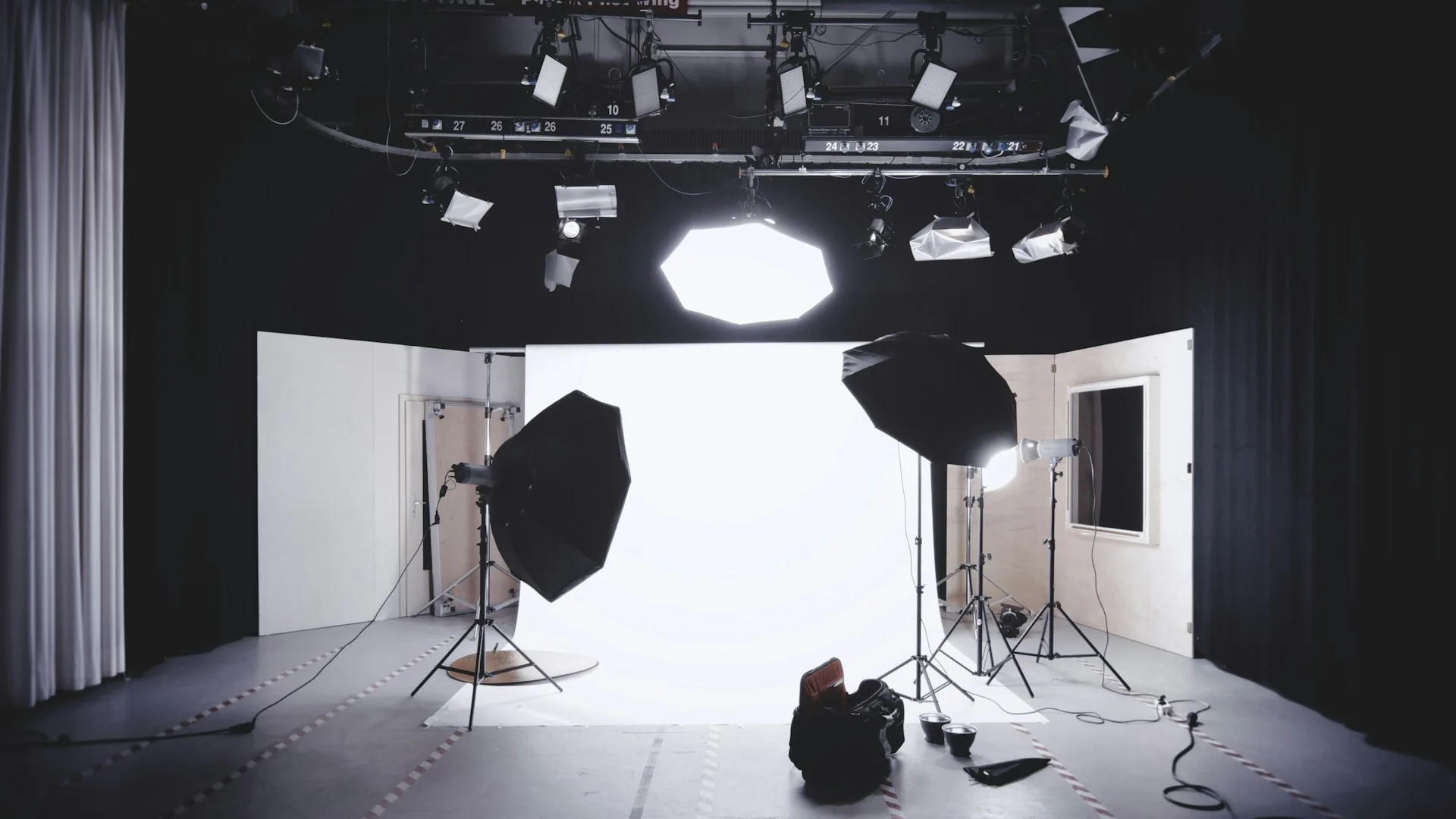
With natural light from a large window and a white fabric reflector you can already shoot a presentable interview. If you want full control, a two-light bi-color LED kit, a key light and a soft fill, handles almost any interior. Something like the Aputure Amaran 100d with a 60×90 cm softbox and an LED panel for fill is a setup that works in offices, meeting rooms and small studios without looking like a TV crew that intimidates the interviewee.
Common mistakes when buying gear
- Buying a premium camera before sorting out audio. The result is a perfect image with a voice that sounds like it was recorded in a basement.
- Using a photo tripod for video. Moves on a ball head are jerky and unusable. You need a fluid head.
- Relying on ceiling lights. Almost all office lighting is yellow or green, looks terrible on camera and is hard to fix in the color grade.
- Shooting in Log without knowing how to develop it. A well-exposed image without Log is better than poorly graded Log in the final delivery.
- Skipping audio monitoring. Without headphones during the recording, you won't know there's background noise until you get to the edit.
Frequently asked questions
Can you shoot a company video with just a smartphone?
For certain formats, yes: quick social media videos, behind-the-scenes clips or very informal content. For a corporate interview or a brand film, the control over exposure, depth of field and audio that a dedicated camera gives you makes a visible difference to the final result.
How much does a minimum professional kit cost?
An APS-C camera body with a prime lens costs around €1,200-1,800 second-hand. The audio kit, between €300 and €500. Basic two-light LED lighting, between €400 and €700. In total, between €2,000 and €3,000 for a kit that covers 95% of situations. Many professionals start by renting rather than buying.
Is it better to rent than buy at first?
If you only have a few projects a year, renting is cheaper and lets you try gear before committing. From around 10-12 projects a year, it usually pays to own the basics. Rental houses in Madrid have practically any piece of kit available.
What changes if the shoot is outdoors?
The main change is audio: outdoors, the lavalier mic needs a furry windscreen to avoid wind noise. Outdoor lighting can often be handled with reflectors and diffusers over direct sunlight. If the sun is very high or very harsh, a variable ND filter on the lens is essential to control exposure.
If you have a specific project and want to know what gear I'd use for that particular shoot, tell me about it through the contact page. Within 48 hours I'll tell you which setup makes the most sense for what you need.