Blog / Guide
How to direct employees with no on-camera experience
How I prepare employees who have never filmed a corporate video: what I say before switching on the camera, how I ask questions and where I direct their eyeline.
Most employees freeze the moment I switch on the camera. It isn't a personality problem, and it isn't that they can't talk about their work. They've simply never done this, and nobody has explained what's expected of them in front of the lens.
I've spent years directing people who aren't actors or trained spokespeople for corporate videos: internal testimonials, company culture interviews, product videos filmed with the company's own technical team. In this guide I explain how I prepare those shoots so the person speaks naturally rather than as if they were reading a press release.
Why most people stiffen up in front of the camera
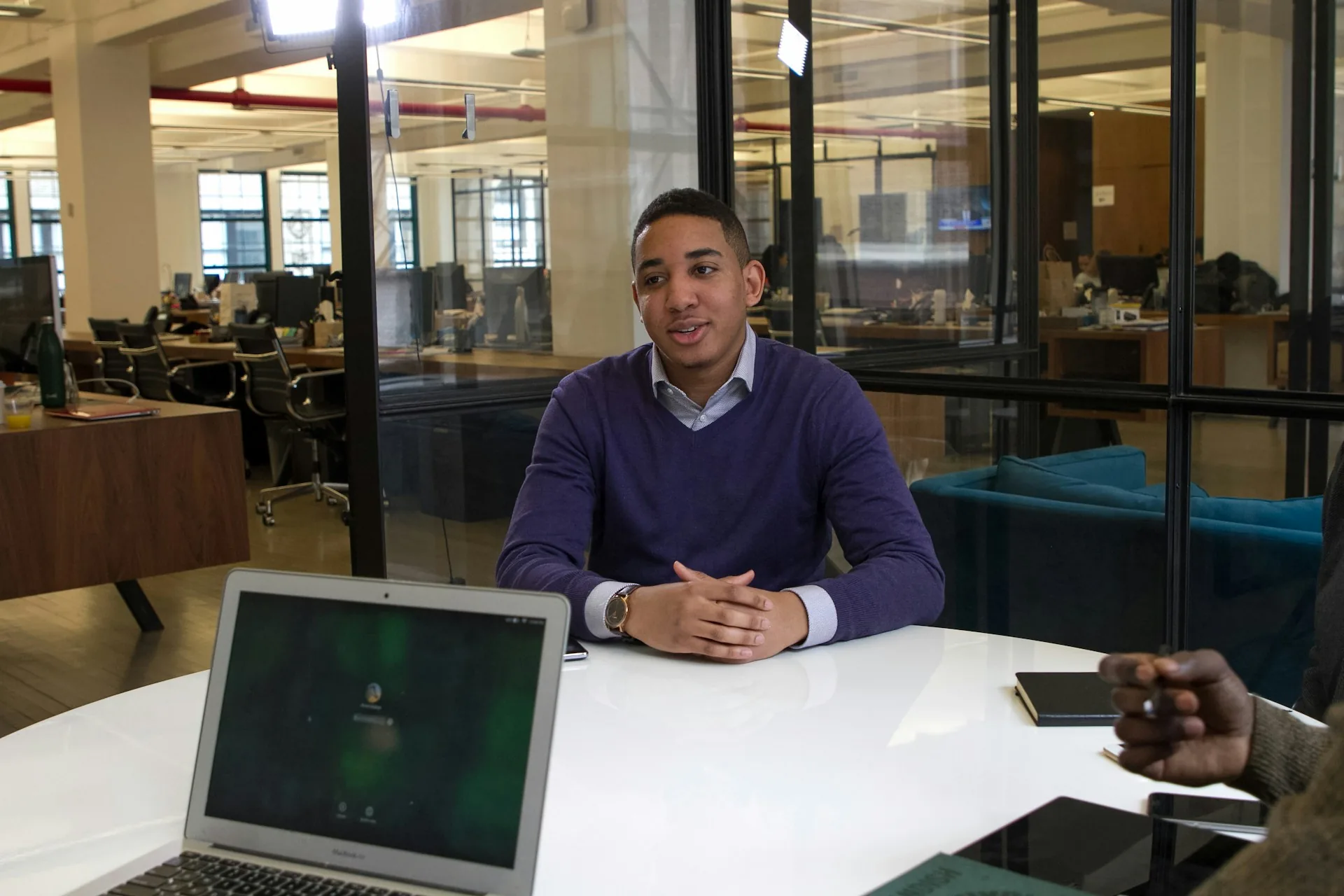
The camera changes anyone's behavior, even people who are excellent at their jobs. There's a fear of making mistakes, of saying something that sounds wrong in front of their bosses or colleagues, and a sense of being tested that doesn't exist in a normal conversation. That nervousness shows in their voice, their eyes and their pauses.
An actor or a media-trained spokesperson knows how to handle that pressure because they've done it many times. An ordinary employee doesn't have that habit, so my job isn't to get a perfect performance — it's to lower the sense of being tested enough for them to talk the way they would in any meeting.
How I direct someone who has never been filmed
The conversation beforehand, before anything is switched on
Before setting anything up, I talk with the person for ten or fifteen minutes with no camera in front of them. I explain what the video is about, where it will be used and what kind of answer I'm looking for, but I don't give them a fixed script. That chat helps them get used to my face and my way of asking questions before there's a lens recording.
Questions, not a script
Instead of giving them lines to memorize, I ask open questions and let them answer in their own words. If the answer comes out too short or too flat, I rephrase the question rather than suggesting what to say. Then, in the edit, I choose the best version from several answers to the same question.
Eyeline and framing
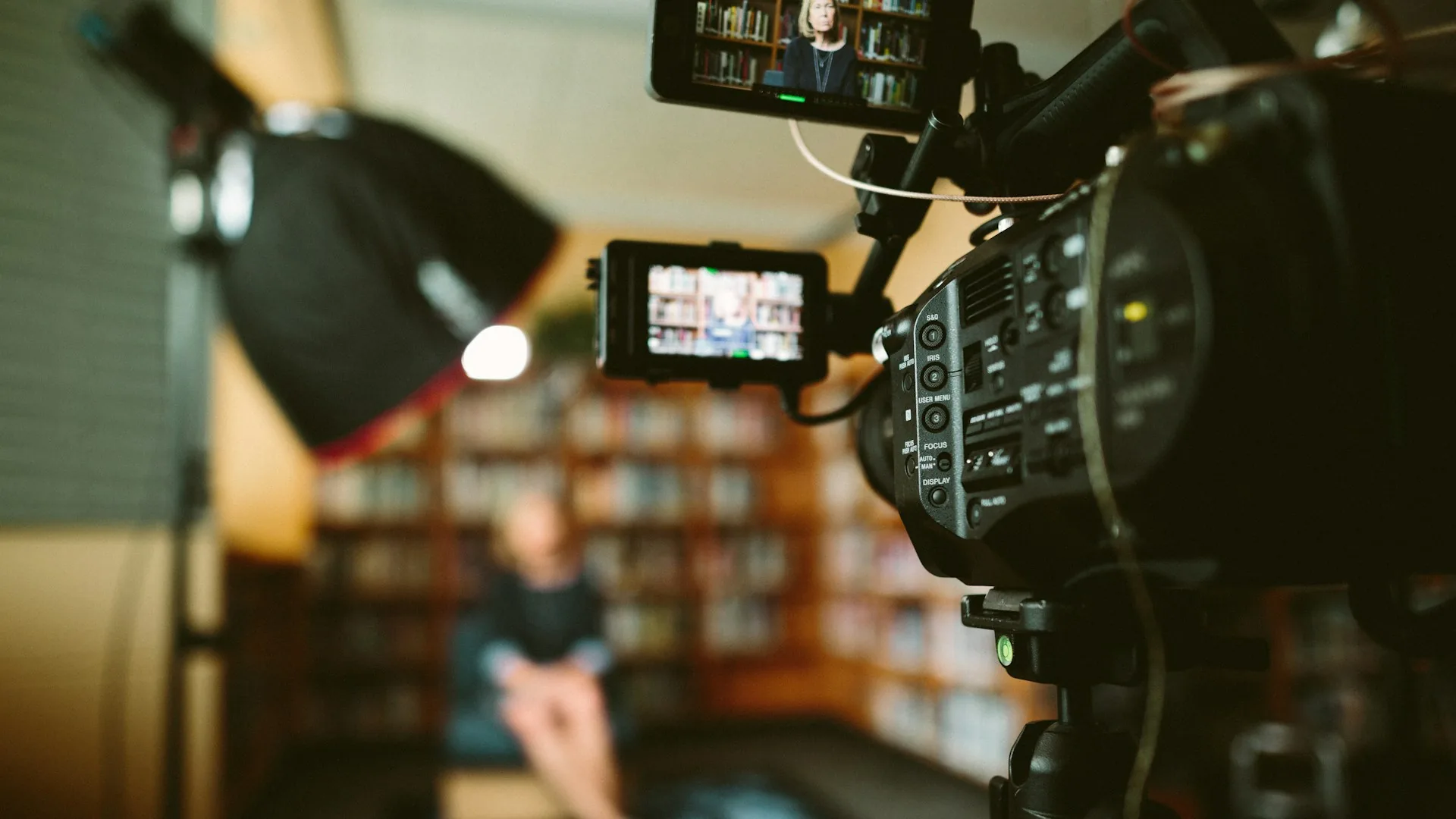
I place the person at a three-quarter angle and ask them to look at me, standing next to the lens, instead of looking straight into the camera, unless the format deliberately calls for it. Looking at a real person instead of a black lens lowers the tension immediately, and you can see the difference in their eyes in the edit.
Common mistakes
- Handing over a fixed script to memorize: it sounds artificial and the person trips up trying to remember it word for word.
- Rolling on the first take without giving the person time to relax in front of the camera.
- Filming the employee while their boss or several colleagues stand watching.
- Asking closed yes-or-no questions that give you nothing usable in the edit.
- Not explaining beforehand where the video will be shown and what it's for.
- Interrupting mid-answer to correct them instead of letting them finish and redoing the take afterward.
Frequently asked questions
How much time do you need to film someone with no on-camera experience?
I allow 30 to 45 minutes per person, including the off-camera conversation beforehand and several takes of the main questions. Rushing is what produces the worst results.
Is it better to give them a fixed script or let them speak freely?
I prefer guide questions to a fixed script. A memorized text always shows, whereas a spontaneous answer to a good question sounds natural even if it isn't perfect.
What do I do if the person stumbles several times in a row?
I stop, take the pressure off with a short break and swap the question for a simpler version. Insisting on the same line only makes the block worse.
How many people can I film in a single session?
In a normal working day I usually film four to six short testimonials, leaving time between each one to reset the set and let the next person relax before sitting down.
If you need to film internal testimonials or interviews with employees who have never been in front of a camera, write to me via /en/contacto and I'll explain how I plan the session so it comes out natural without costing your team a whole day of work.