Blog / Guide
Art direction for corporate video: what it is and how to apply it
Art direction defines the look of your video long before the camera rolls. What it involves on a corporate shoot and how to avoid the most common mistakes.
Art direction isn't just putting flowers in the background of an interview. It's the deliberate choice of every visual element on screen: the space, the color palette, wardrobe, props. In a corporate video, those choices determine whether the company looks like what it claims to be, or just looks like any other company.
I've filmed with clients who arrived on set with the room ready, the spokesperson well dressed and the details thought through in advance. The difference in post-production is striking. And I've filmed in situations where nobody had thought about anything, and the result — even with good lighting — never quite convinces.
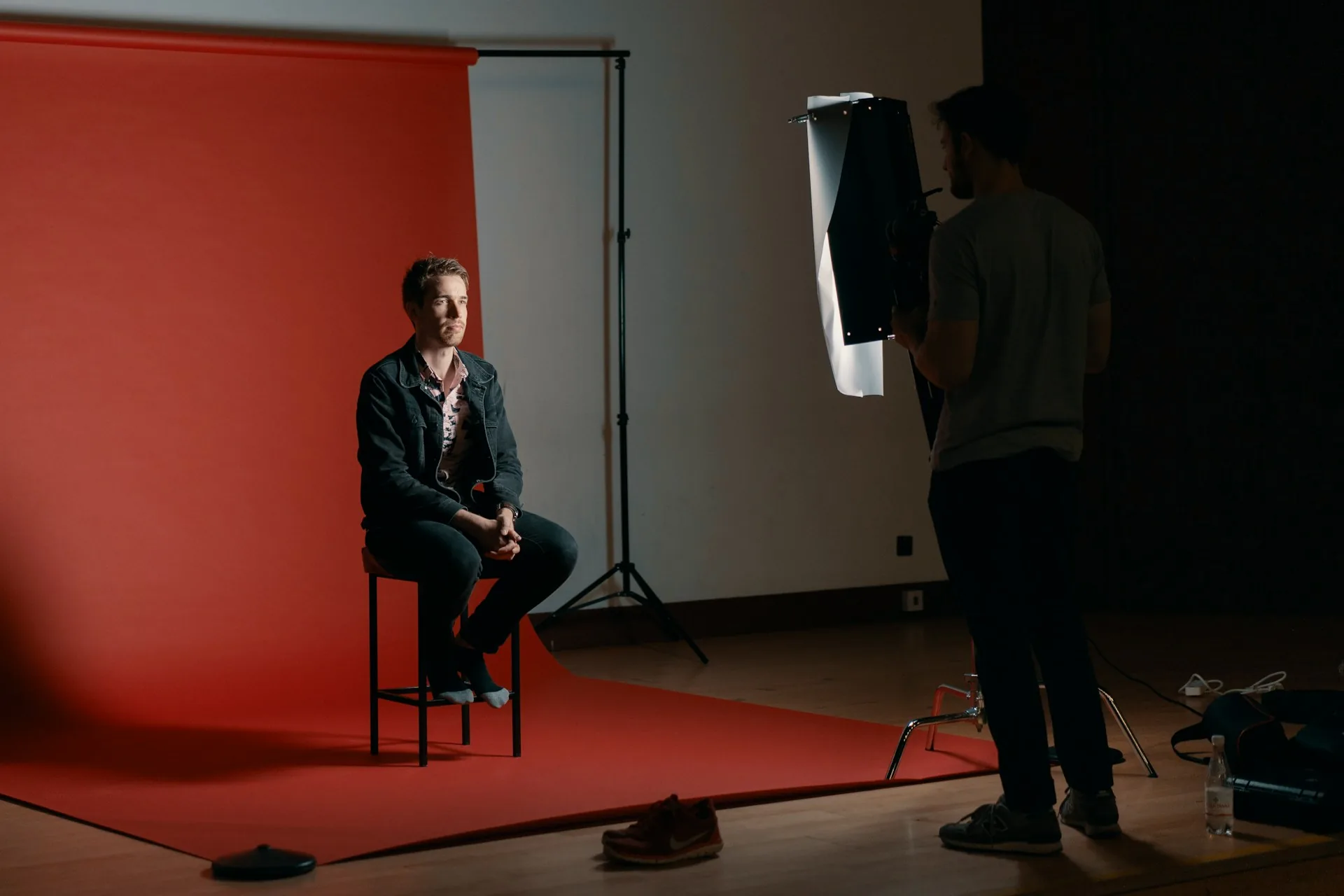
What art direction means in a corporate video
In film and advertising, the art director is responsible for the entire visual side of a production: sets, set dressing, color palette, wardrobe, props. In corporate video, that role rarely falls to a dedicated person. It's taken on by the director, the client, or nobody — and that last option shows.
In practice, art direction on a company video means making decisions before the shoot: where we film, what's in frame, which colors dominate, what the spokesperson wears, what is — and isn't — on the table. You don't need a feature-film production budget. You need time to think before shoot day.
How to do it well
Space and set design
Choosing the right space is the first art direction decision. An open-plan office with good natural light works; a meeting room with gray panels and fluorescent tubes doesn't. If your own premises don't work on camera, considering an external location makes sense. Within the chosen space, you need to clear things out: hide loose cables, tidy any shelves visible in the background, remove distracting objects. If it doesn't add, it subtracts.
Color palette and wardrobe
The colors of everything in frame have to work together. If the company uses navy blue in its brand identity, the spokesperson shouldn't turn up in a green-and-orange striped shirt. I'm not talking about uniforms: I'm talking about consistency. The same goes for background walls, visible furniture, the paper on the desk. A palette of 2 or 3 colors that don't clash is enough.
Props and brand details
Corporate props are the elements that reinforce the company's identity on screen: a well-placed physical product, the logo in a natural context — not stuck on with tape — materials specific to the industry. They're small details that add credibility. A lawyer filmed without a single book on the shelf is less convincing than one with their library behind them.
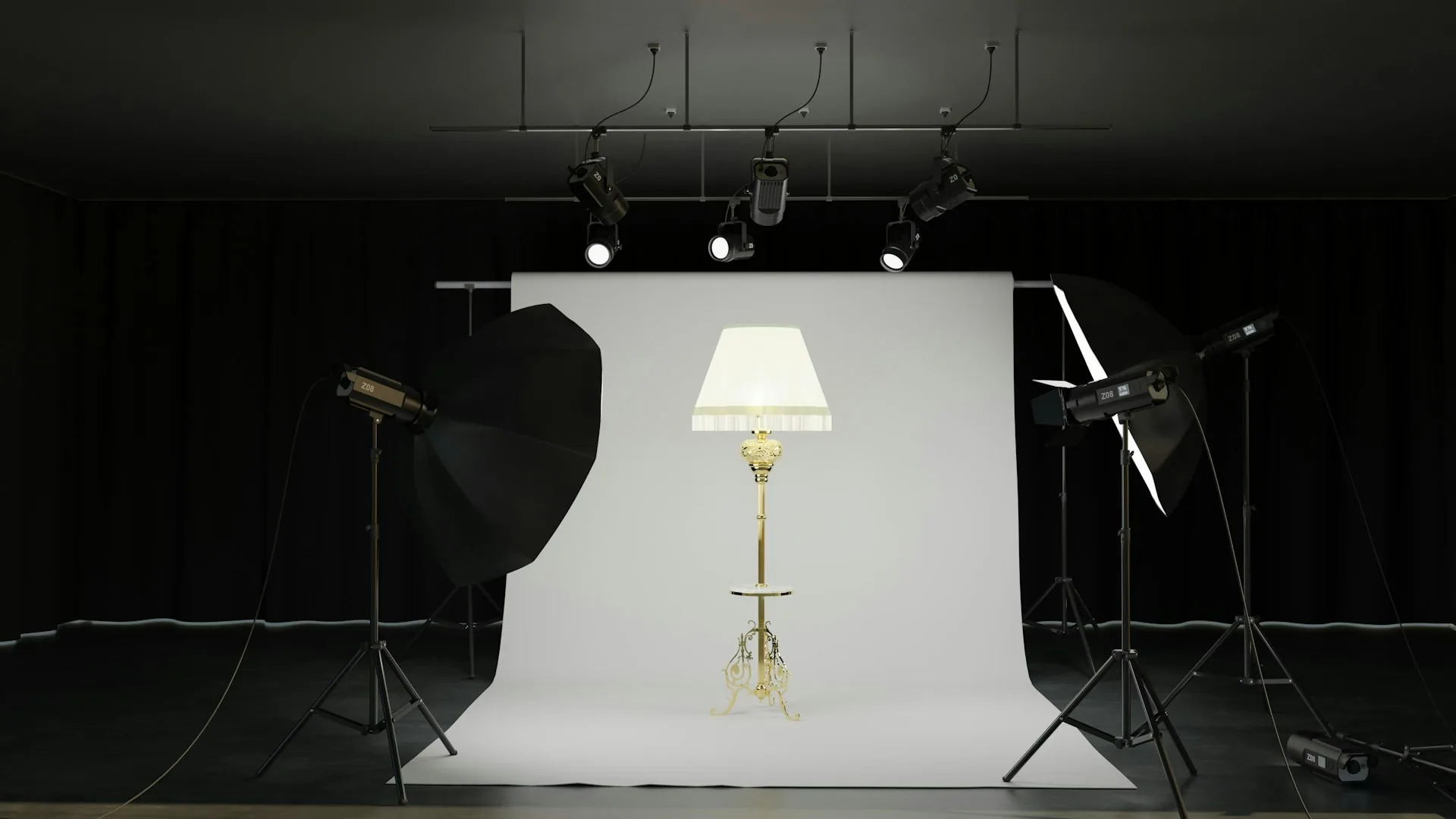
Common mistakes
- Backgrounds cluttered with distracting elements: screens switched on, full whiteboards, stacked boxes.
- Wardrobe that clashes with the space: colors too close to the background or too loud.
- Uncorrected fluorescent office lighting, which flattens the image and makes it look low-budget.
- Forced brand logos: a sign with the logo placed artificially in the foreground.
- Not thinking about secondary backgrounds: with moving shots or wide shots, the whole background ends up in frame.
- Changing the space between takes without resetting it: art continuity matters just as much as shot continuity.
Frequently asked questions
Do I need to hire an art director for my corporate video?
Not necessarily. For small and mid-sized productions, the director and the client can cover it well with a prep session beforehand. Hiring someone specifically for the role only makes sense for productions with multiple sets, many spokespeople or elaborate set design needs.
How much time does art direction prep take?
For a standard corporate interview, between 30 minutes and 2 hours of prep the day before is enough: choosing and clearing the space, deciding on wardrobe, preparing the props. For more complex sets with several setups and locations, a full prep day is typical.
What matters more: the space or the lighting?
Each one shapes the other. A well-chosen space makes lighting easier and reduces the technical work. Good lighting can make up for some limitations of a space, but it can't make a chaotic background or jarring wardrobe disappear. Ideally, you plan both together.
Is it worth investing in set dressing for a company video?
It depends on how the video will be used. For a brand or institutional piece with a long shelf life, yes. For an internal communications video, the priority may lie elsewhere. What's always worth it is cleaning and organizing the space before filming: it costs no money, just time.
Art direction in corporate video isn't an aesthetic whim. It's the difference between a result that strengthens the company's image and one that simply documents a shoot. If you have a project in mind and want to talk it through, you can reach me through the contact page.