Blog / Guide
How to interview a client for a testimonial video
Interviewing a client for a testimonial video isn't just putting questions to them in front of a camera. Here's how I prepare the interview so the answers sound natural and say something real about the company.
A testimonial video is only as good as the client's answers on camera. You can have the best lighting and the best shot, but if the person answers with textbook phrases, the video is useless. The interview is 80% of the result, and it's prepared before the camera is switched on, not during.
I've spent years filming client testimonials for companies in Madrid, and the difference between a testimonial that persuades and one that sounds like an ad is almost never technical. It's in how the conversation is set up. Here's how I prepare it.
Why preparation changes the result
A client who agrees to record a testimonial is almost never an actor or a spokesperson. You clip on a lavalier mic, switch on two lights and a camera, and they usually stiffen up. Add the fact that they don't know what you're going to ask, and the answers come out guarded and defensive, not natural.
Preparation doesn't mean giving them the questions in writing to memorize. It means that before filming you already know what story you want to draw out of that person, and that the conversation beforehand has lowered their tension enough for them to talk the way they really talk, not the way they think they should sound in a corporate video.
When that fails, the symptom is always the same: generic lines like “the experience has been very positive” or “the team is very professional.” They're true but useless, because they say nothing a viewer couldn't assume just from watching the video.
How I prepare the interview
A question guide, not a fixed questionnaire
Before the shoot I have a 15–20 minute call with the client to understand what problem their company had before hiring the service and what changed afterward. From that I draw up 6 to 8 open questions, never yes-or-no ones. Instead of “Are you happy with the result?” I ask “What surprised you most about the process?” An open question forces the person to build an answer with real substance.
The setting and the camera
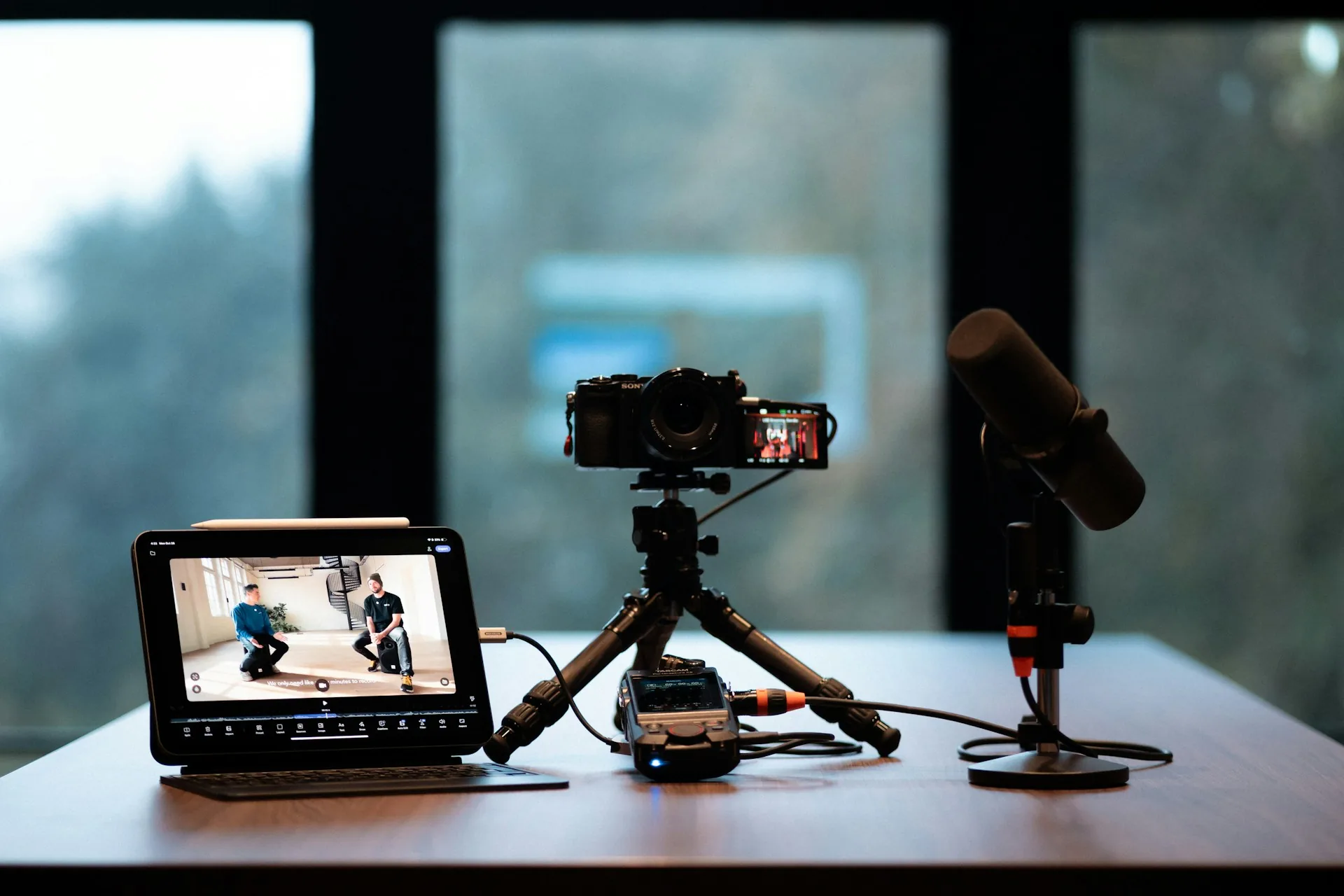
I film with two cameras, one front-on and slightly off-center and another on a wider shot, so I can cut between angles without the jump showing when the person hesitates or repeats an answer. The mic is usually a discreet lavalier, because a handheld mic in front of someone's face feels too much like a TV news interview and makes the client tense.
I choose a space where the client feels comfortable — almost always their own office or the place where they use the product or service, not a neutral studio backdrop. That helps them talk about their day-to-day instead of switching into presentation mode.
Breaking the ice before filming
I don't use the first five minutes with the camera rolling. I chat with the person about something unrelated to the video, check the framing and adjust the audio. That downtime helps them forget they're being filmed. The first good answer is almost never the first one recorded — it's the third or fourth.
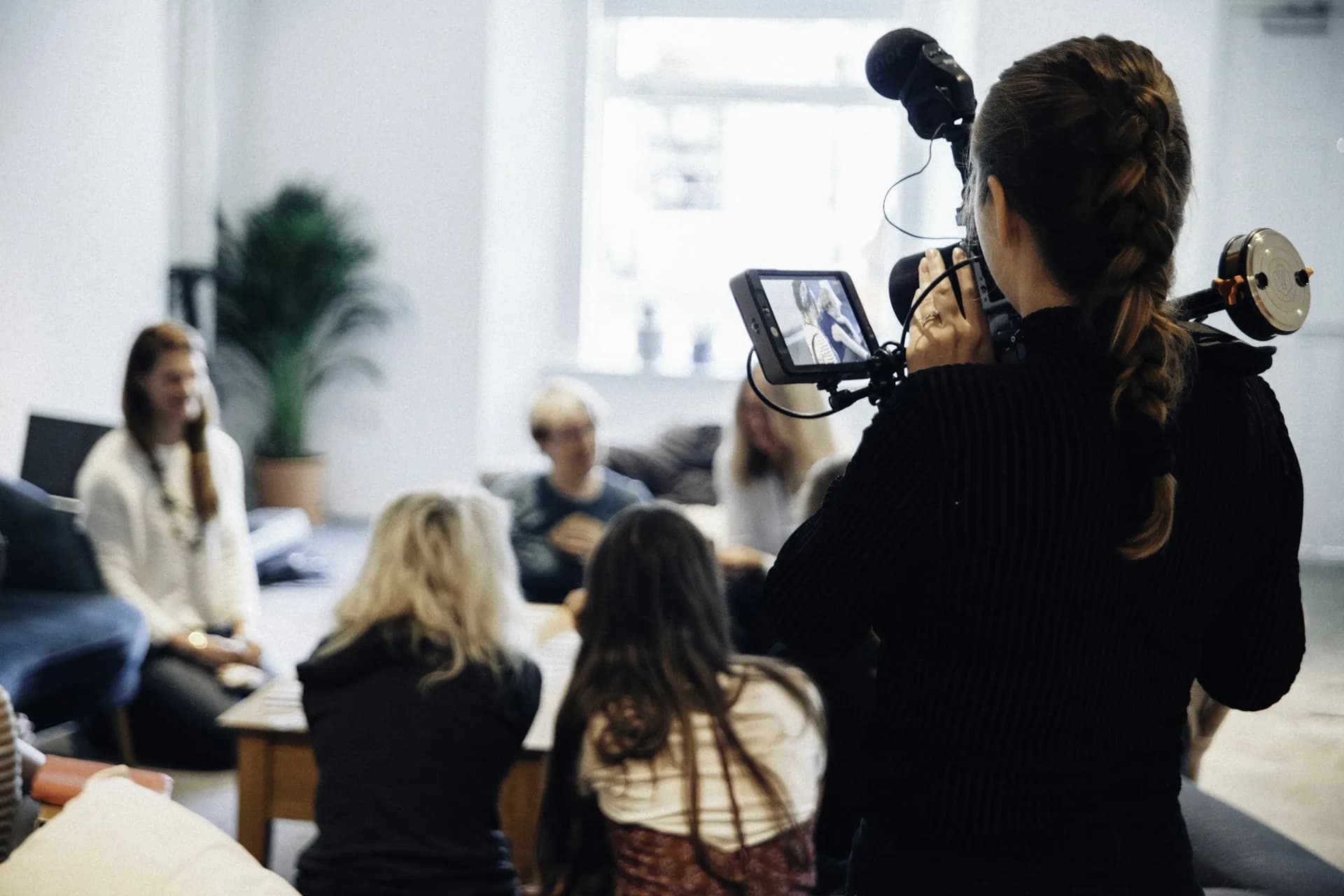
A testimonial interview usually involves 30 to 45 minutes of recorded footage to end up with 2 or 3 minutes in the final edit. That ratio is normal: you need a lot of material to find the lines that really add something. Trimming the flat answers in DaVinci Resolve and keeping the ones with nuance is where the video is won, not in the filming itself.
Mistakes I avoid
- Sending the exact questions in writing before filming: the answer comes out memorized and it shows.
- Recording the first answer the person gives without letting them warm up first.
- Asking closed questions that can be answered in one word.
- Filming in a setting that isn't theirs, forcing an artificial staging.
- Not asking about the problem they had before: without the “before,” the “after” has no contrast or impact.
- Wrapping up the interview as soon as a decent answer comes out, without looking for a second, better one.
Frequently asked questions
Should I give the client the questions before filming?
I prefer to share the general topics we'll cover, not the exact questions. That way the person arrives with ideas but without an answer rehearsed word for word.
How long does a testimonial filming session take?
30 to 45 minutes of actual recording, plus setup time for lighting and sound. For the client it's usually an hour in total, including the chat before the camera is switched on.
What do I do if the client gets nervous in front of the camera?
I stop, talk with them without recording and pick up again when they're more relaxed. Forcing an answer while the person is tense shows in the final video, and that footage almost never gets used.
Do I need a shooting script for this kind of interview?
Not in the sense of a fixed script. What I do need is a list of open questions and a clear idea of the story I'm after before sitting the person down in front of the camera.
If you have a client willing to record a testimonial and don't know how to start the conversation beforehand, write to me via /en/contacto and I'll help you frame the questions.