Blog / Guide
Audiovisual production for events: what a full service for your company includes
What goes into an audiovisual production service for corporate events: pre-production, coverage, streaming, editing and deliverables, explained by a Madrid filmmaker.
When a company writes to me asking for audiovisual production for an event, it's almost never talking about the same thing as the previous one. One wants a two-minute recap video. Another wants to broadcast the day live. Another just needs the talks recorded to post on the intranet.
That's why the first thing I do is clarify what a full service means. Here's how I structure it when I cover a corporate event from start to finish.
What audiovisual production means at an event
It's all the image and sound work surrounding the event, not just the day it takes place. It starts weeks earlier, with planning, and ends when I deliver the final files. Filming is one part, and not the longest.
An event usually generates three kinds of material: a recap video to communicate afterwards, the full talks or sessions, and a series of short pieces for social media. Defining which ones you want before the shoot completely changes how I place the cameras.
How I organise it so it works
Pre-production: what is decided beforehand
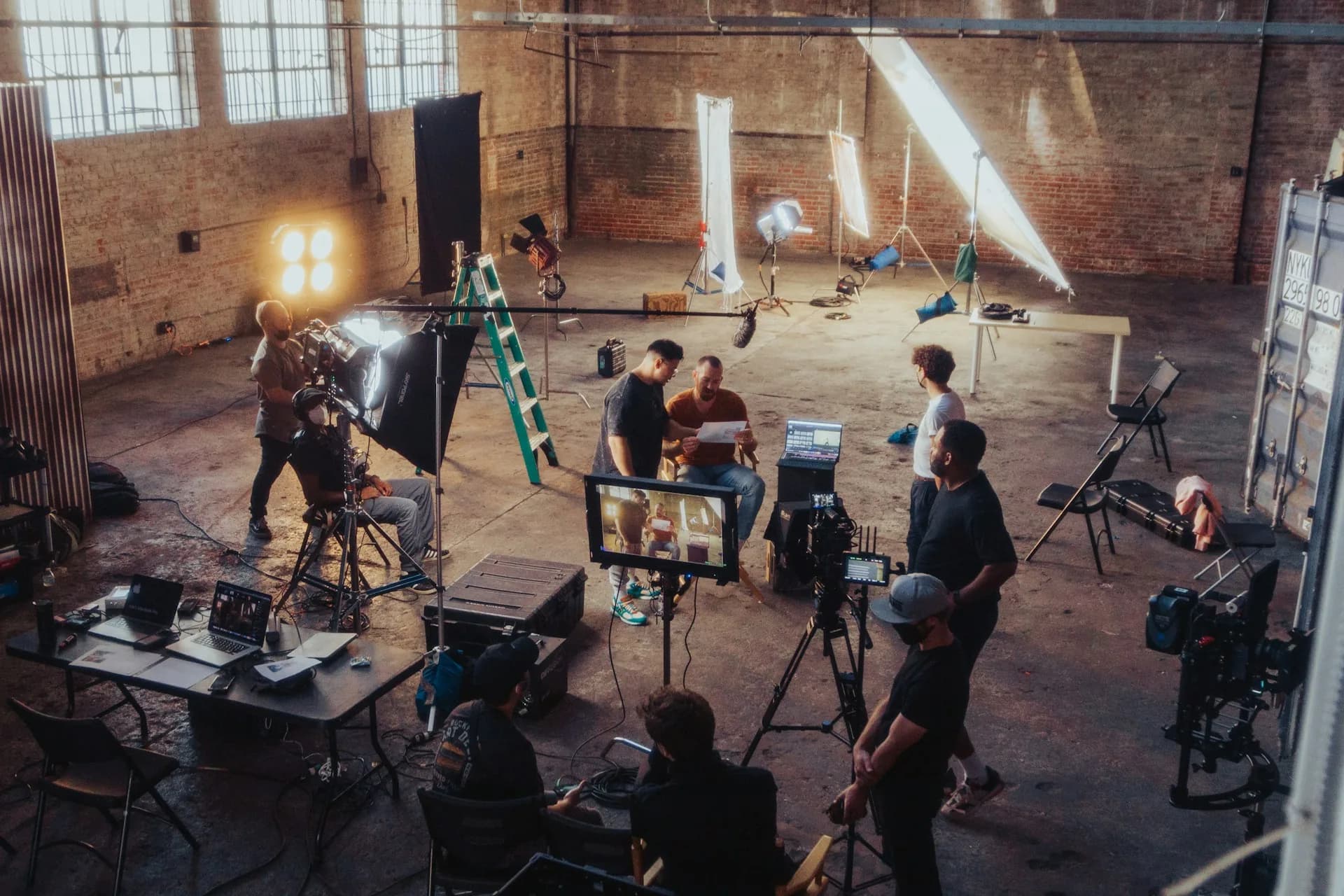
I ask for the programme, the floor plan of the room and the name of the venue's technician. With that I decide how many cameras are needed, where they go and how I connect to the room's sound. If there are key speakers, I agree in advance when I'll interview them, because during the event nobody has time.
Coverage: the day of the event
I arrive early to set up and test. At a one-day event I usually work with two cameras: a fixed one for the wide shot and a mobile one for details, audience and speakers. If there is more than one room or a large audience, I add a second operator. I record direct audio from the sound desk and also with my own microphones, as a safeguard.
Post-production and delivery
I edit in DaVinci Resolve. The recap video is usually ready between a week and ten days after the event, depending on length and review rounds. The short pieces for social media come out sooner, because they lose value if they arrive a week late.
Common mistakes when hiring
- Asking for coverage without deciding which deliverables you need afterwards.
- Giving only a few days' notice and not being able to visit the venue.
- Assuming the room's sound can be recorded without coordinating with the technician.
- Wanting a live broadcast without having checked the venue's connection.
- Not naming a contact person who can make decisions on the spot during the event.
Frequently asked questions
What is the difference between event coverage and audiovisual production?
Coverage is recording what happens. Audiovisual production also includes preparation, direction during the event and editing the final pieces. For a corporate event, the second is usually what you want.
How many cameras do I need for a one-day event?
For one room and one day, two cameras cover it well: a fixed wide shot and a mobile camera. With several rooms or a large audience, an additional operator is needed.
Can the event be broadcast live?
Yes, but it needs a stable connection at the venue and prior testing. If the connection isn't reliable, it's better to record and publish the talks a few hours later.
When do I receive the edited material?
The short pieces for social media, in one or two days. The recap video, between a week and ten days, depending on length and review rounds.
If you're preparing an event and want to know what production it needs, tell me the date, place, capacity and what you want to have afterwards via /en/contact. With that I'll propose a coverage plan and a concrete quote.